Are the Kindle’s Days Numbered?
Although Kindle sales have seemed strong since its debut nearly two years ago, the future of Amazon's e-reader may not be rosy, according to The Atlantic's Kevin Maney, who sums up the "Kindle problem" thusly: "[I]n aiming to provide both a great experience and supreme convenience, it has achieved neither."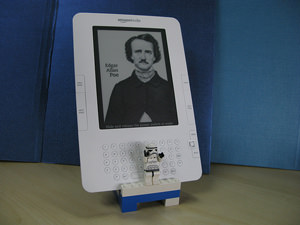
Although Kindle sales have seemed strong since its debut nearly two years ago, the future of Amazon’s e-reader may not be rosy, according to The Atlantic’s Kevin Maney, who sums up the “Kindle problem” thusly: “[I]n aiming to provide both a great experience and supreme convenience, it has achieved neither.” –KA
Your support matters…The Atlantic:
On the reading experience side, the Kindle ended up on shaky ground, too. For people who love books, there are quite a few intangibles that an electronic device will never quite be able to replicate. For example, the Kindle lets readers down with respect to one subtle but powerful element of the traditional book’s appeal: its role as an identity marker. Pulling out a particular book on an airline flight or in a doctor’s office can mean staking a claim to being a particular kind of person. Likewise, the books lining your living room or office can tell others about your interests and background. But on the Kindle, no matter what you’re reading, all anyone else will see is an unchanging plastic device.
All in all, the Kindle ended up caught in a no-man’s land: it has a number of nifty features and convenient aspects – but also significant drawbacks and a high price tag. All of which leaves many consumers unconvinced that they really need to buy the thing.
Independent journalism is under threat and overshadowed by heavily funded mainstream media.
You can help level the playing field. Become a member.
Your tax-deductible contribution keeps us digging beneath the headlines to give you thought-provoking, investigative reporting and analysis that unearths what's really happening- without compromise.
Give today to support our courageous, independent journalists.
 Economic Justice
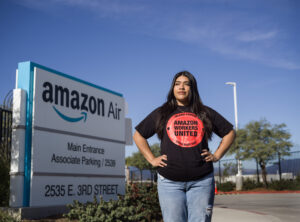
Two Christmas rushes ago, workers at this Amazon air cargo hub started to win improvements at work by relying on each other.
Economic Justice
Two Christmas rushes ago, workers at this Amazon air cargo hub started to win improvements at work by relying on each other.
 TD Original
As they once did in South Africa, U.S. tech companies maintain a system of surveillance and control in Gaza and the West Bank.
TD Original
As they once did in South Africa, U.S. tech companies maintain a system of surveillance and control in Gaza and the West Bank.
 Courts & Law
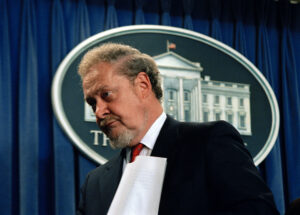
As the United States moves against Google, antitrust law is still under the influence of Robert Bork.
Courts & Law
As the United States moves against Google, antitrust law is still under the influence of Robert Bork.
 Labor
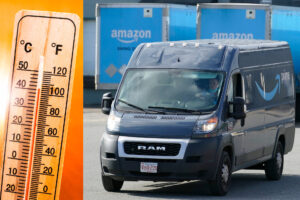
Keeping drivers safe requires fundamentally changing the company's business model.
Labor
Keeping drivers safe requires fundamentally changing the company's business model.
 Editorial Cartoons
 The coronavirus is changing the way companies do business — in the U.S. and across the globe.
You need to be a supporter to comment.
There are currently no responses to this article.
Be the first to respond.