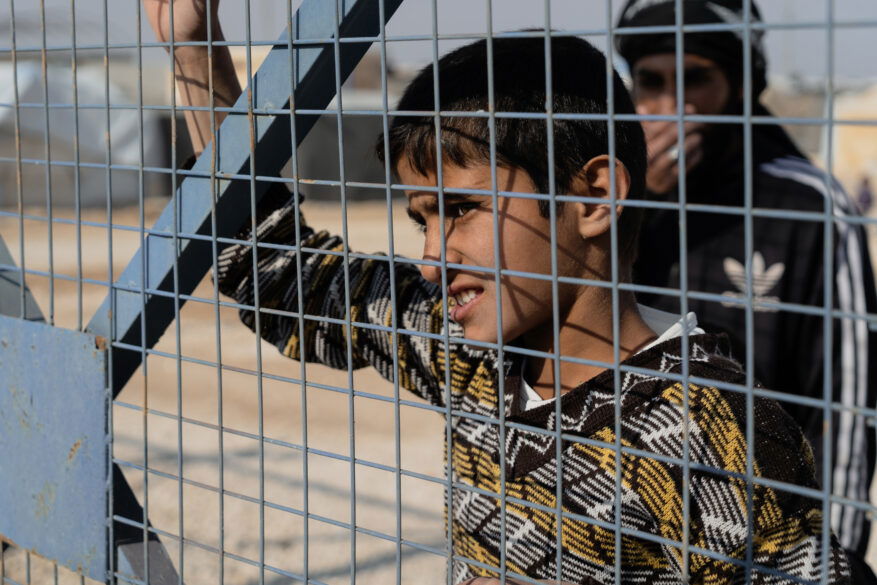
 TD Original
Rojava’s Embattled Revolution
Against all odds, the Middle East's most progressive society survives. A Dig curated by Matt Broomfield Kurds in the Crossfire
 Surrounded and Abandoned, Rojava Faces Slaughter
 Where Do the Kurdish Militias Go From Here?
 Hope Without Hope in Rojava
 Fragility and Resilience: Glimpses of Rojava
 The Stars Align for Trump’s Troop Withdrawal From Syria
 Can the Kurds Help Build a New Syria?
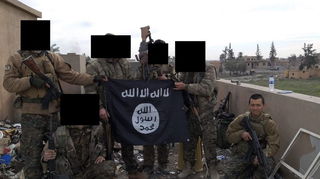 From Heroes to Suspects: The Betrayal of the Anti-ISIS International Brigade
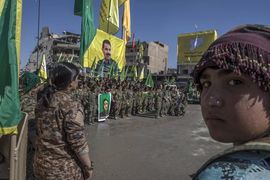 Rojava’s Elections Defy Turkish Bombs and U.S. Indifference
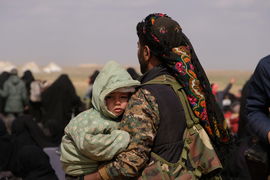 The ISIS Prison Camps the World Forgot
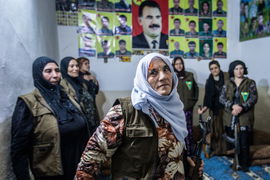 Rojava’s Improvised Revolution
Homage to Rojava
The Kurdish project to build a new kind of democracy amid the Syrian civil war is ending. A journalist who has followed the revolution for years asks: What did it all mean?
In October 2019, President Donald Trump gave Turkey the green light to launch a military operation against Syrian Kurdistan, the Kurdish-led autonomous region known as Rojava. As journalists and nongovernmental organization workers fled toward the sole border crossing linking the war-torn region to the outside world, they paused to post teary selfies at the rickety pontoon bridge that spans the border, en route to hotels in neighboring Iraq where they would pen dramatic op-eds heralding the end of the region’s bold project in direct-democratic, women-led governance in the Middle East.
At the time, I thought these dire proclamations overstated the case. On the one hand, Kurds rightly feared that Turkish drones and Islamist militias would continue to tear apart the Kurdish polity, regardless of the ceasefire deal, or else that Syrian dictator Bashar al-Assad would gradually reassert his brutal rule. But as the weeks turned into months into years, we could see that the Rojava revolution had survived — battered, bruised and compromised — enduring even if the flags flying overhead had changed.
Yet seven years later, as the Islamist forces that had deposed al-Assad turned their crosshairs to Rojava, it was time to make my own hasty exit from Rojava to Iraq. Taking the same potholed road toward the same makeshift border crossing, I felt a commingling of horror, nostalgia and grief. Just as on scores of previous trips I had made along that route, I reflected with sadness on the Syrian-Turkish border wall constructed from 2016 to 2018 in response to the outbreak of Kurdish-led autonomy in Rojava. That wall now separates Rojava’s desert towns from the soaring mountains that constitute the Kurds’ true historic strongholds.
Dig deeper Feb 13, 2025Rojava on the Brink
Turkish airstrikes and an Islamist power in Damascus endanger the future of Syrian Kurdistan’s multiethnic democratic federation.
recently returned to Rojava, as Syrian Kurdistan is known, for the first time since the collapse of the Assad regime. Throughout years working in the Kurdish-led, multiethnic federation, famed for its key role in defeating ISIS, I had never before witnessed such widespread trepidation. Everyone is waiting to see whether Rojava’s governing body, the Autonomous Administration of North and East Syria, can reach an understanding with the new Islamist regime in Damascus under Hayat Tahrir al-Sham, which is ideologically opposed to the AANES’s stated vision of women’s and minority ethnic autonomy. From Kurdish refugees sheltering in prisons abandoned by Bashar Assad’s security forces to Arabs liberated from ISIS yet dissatisfied with the AANES, the fate of millions hangs in the balance.
Amid this political limbo, war still rages. Turkey has long bankrolled and profited from Islamist militancy in pursuit of its own anti-Kurdish agenda, and is determined to prevent the AANES from reaching any accord with the HTS, which it backs. Ankara has taken advantage of the post-Assad power vacuum to displace around 100,000 Kurds, while also seizing territory. Intense Turkish airstrikes are killing Kurds and Arabs alike, targeting civilians and wiping out power and water supply throughout the region. The AANES holds thousands of ISIS affiliates in camps and detention centers. These militants pose an additional threat as they eagerly await a takeover by HTS or Turkey’s own network of Islamist militias. Dig deeper