Twenty-Five Years After: The Toxic Legacy of 9/11
The poisons are in the air and the Trump administration. The Statue of Liberty can be seen at first light from a view from Jersey City, N.J., as the lower Manhattan skyline is seen though a thick smoke filled the sky early Saturday, Sept. 15, 2001. (AP Photo/Dan Loh)
A quarter-century after Sept. 11, America is commemorating the day with a combination of reverence, Islamophobia and jingoism. But there is another current running through the mix of emotions: anger over a number of unanswered questions about the attacks, their toxic legacy and the extraordinary violence that was subsequently committed in the country’s name.
There is much to be angry about. Guantanamo Bay not only remains open, but is receiving immigration detainees while the Trump administration de-lists 9/11-era Al Qaeda recruiters to please the new Syrian government. A nuclear technology deal has been signed with Saudi Arabia, whose official role in the 9/11 attacks remains a subject of disturbing inquiry. The BBC and ProPublica both reported this week on Omar al-Bayoumi, a Saudi intelligence asset who helped two 9/11 hijackers. According to the BBC, videos show al-Bayoumi playing paintball and shouting “Allahu Akbar” near San Diego with an official from Saudi’s Ministry of Islamic Affairs in 1997 or early 1998.
According to ProPublica, recently declassified FBI documents shed light on why evidence linking Bayoumi to the Saudis did not previously come to light:
[By October of 2001], the agency’s new director, Robert Mueller, had taken the unusual step of ordering that the 9/11 case be run out of its Washington headquarters. The Penttbomteam, as it became known in the FBI’s clunky acronym for Pentagon/Twin Towers Bombing, mobilized thousands of FBI agents and analysts around the world.
How the headquarters team translated and analyzed the materials obtained from Bayoumi in Britain is unclear. But the team did not appear to share the evidence widely. In another memo, dated May 15, 2002, the San Diego FBI office noted that it was asked to review only five of the more than 80 VHS tapes seized from Bayoumi in Birmingham. Two of those were duplicates and included footage of a paintball fight and a family trip to Sea World. “Nothing of significant investigative/evidential value has been discovered,” the memo stated.
Although Bayoumi’s friends and associates helped the hijackers with everything from part-time jobs to flying lessons (they flunked out because their English was so poor), FBI leaders dismissed the idea that any of the people who helped them knew they were Qaida operatives sent on a still-evolving terrorist mission.
Suspicions of a cover-up also haunt the toxic legacy of Ground Zero in the days, weeks and months following the attacks. This week, New York City Mayor Zohran Mamdani announced that the city was launching a searchable September 11 Portal, comprising 170,000 pages of previously unreleased documents related to the air quality around the World Trade Center site and lower Manhattan. Reports The New York Times:
The documents are limited in scope, offering only a fraction of the air quality reports taken around ground zero. And while they also include a smattering of internal memos — including the so-called Harding memo, in which the city discussed its potential liability stemming from the Sept. 11 air quality — many more are presumably absent.
But even in a scattershot way, the records seem to strengthen the notion that New Yorkers were instructed to return to the ground zero area before it was safe to do so, potentially exposing workers and residents to dangerous toxins.
“The very least our city owes the families, survivors and first responders whose lives were forever changed by the horrific terror attack of Sept. 11 is transparency and accountability,” Mr. Mamdani said in a statement.
Additional documents, to be made available in coming months, will help complete the picture of what city officials knew about the environmental impacts of the attacks, how they planned for the city’s recovery, and what calculations they made regarding the health of New Yorkers during the reopening and rebuilding of downtown Manhattan.
In no aspect is 9/11 a strictly historical matter receding into the far distance of collective memory, as with the assassination of John F. Kennedy. Just as the poison released by the WTC’s collapse is still causing cancers, so are the structures and laws created in the wake of 9/11 being used to attack civil liberties and human rights in the U.S. and around the world. The Trump administration is making the most of its post-9/11 executive power and privileges, and expanding them whenever possible — from digital surveillance, to illegal bombings, to presidential immunity.
Civil libertarians who condemned the passage of the PATRIOT Act in 2001 have been proven right, writes Radley Balko in The New York Times:
The administration’s summary executions of suspected drug smugglers in the Caribbean have been denounced by legal scholars as illegal under both domestic and international law, and as likely crimes against humanity… Mr. Trump’s deputy chief of staff, Stephen Miller, according to multiple reports, has openly encouraged immigration officers to use more violence and force more confrontation with protesters while regularly reminding them of their “immunity,” even after the killing of Renee Good in Minneapolis… These are the abuses of post-9/11 powers we know about; there are almost certainly more that we don’t. The expanded surveillance authorities have such restrictive rules for disclosure that only a handful of people will know if they are being deployed against Americans. Mr. Trump’s handpicked prosecutors are going after the kinds of leaks that helped reveal abuses in prior administrations, which means more disclosure today is even less likely. And under Mr. Trump, the intelligence agencies have at times abandoned the post-Watergate practice of telling Congress what secret powers it is using.
Read the rest of Balko’s essay here. For more about 9/11’s legacy of forever wars, see Norman Solomon’s recent piece for Truthdig here, and an interview with antiwar historian Jeremy Varon here.
Rooted in Truth.Independent by Design.
Your support helps ensure that rigorous reporting, thoughtful analysis, and investigative journalism remain accessible to everyone.
Support independent journalism.
 Health & Wellness
Mayor Mamdani is making public a trove of previously withheld city documents related to air quality and health concerns after the attack on the World Trade Center 25 years ago.
Health & Wellness
Mayor Mamdani is making public a trove of previously withheld city documents related to air quality and health concerns after the attack on the World Trade Center 25 years ago.
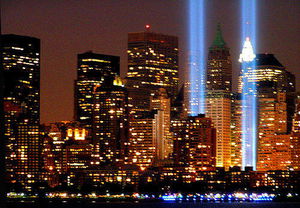 The observance in Manhattan begins with a moment of silence and bells tolling at 8:46 a.m., the time a hijacked plane slammed into the Trade Center's north tower.
It’s not just first responders who were harmed by fumes from the lower Manhattan attack, but workers, students and area residents.
The observance in Manhattan begins with a moment of silence and bells tolling at 8:46 a.m., the time a hijacked plane slammed into the Trade Center's north tower.
It’s not just first responders who were harmed by fumes from the lower Manhattan attack, but workers, students and area residents.
 Clinton's doctor had diagnosed the Democratic presidential nominee with pneumonia on Friday, according to reports.
You need to be a supporter to comment.
There are currently no responses to this article.
Be the first to respond.