The Most Trusted Name in News Just Stole Your Computer
Visitors to CNN's Web site looking to watch streaming video of the inauguration on Jan. 20 got this message: "For faster, better video, click 'yes' here." Doing so installed a peer-to-peer plug-in that transferred the bandwidth responsibility of streaming the video from CNN to the users, taking over visitors' computers in the process.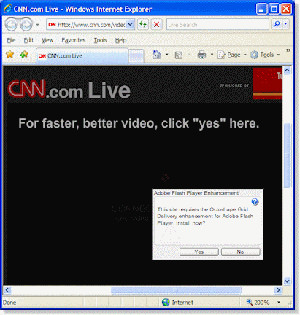
Visitors to CNN’s Web site looking to watch streaming video of the inauguration on Jan. 20 got this message: “For faster, better video, click ‘yes’ here.” Doing so installed a peer-to-peer plug-in that transferred the bandwidth responsibility of streaming the video from CNN to the users, taking over visitors’ computers and potentially saving CNN a boatload of cash in the process.
Distributed downloading can be efficient, and there’s nothing wrong with a major media company trying something new, but there are a number of ethical and technical concerns that could have been avoided if CNN had simply bothered to tell its visitors what clicking “yes” would actually do.
Your support matters…Windows Secrets:
Many people who watched live streaming video of the inauguration of U.S. President Barack Obama on Jan. 20 may not realize that their PC was used to send the video to other PCs, too.
Clicking “yes” to a CNN.com dialog box installed a peer-to-peer (P2P) application that uses your Internet bandwidth rather than CNN’s to send live video to other viewers.
Independent journalism is under threat and overshadowed by heavily funded mainstream media.
You can help level the playing field. Become a member.
Your tax-deductible contribution keeps us digging beneath the headlines to give you thought-provoking, investigative reporting and analysis that unearths what's really happening- without compromise.
Give today to support our courageous, independent journalists.
 TD Original
Reflecting on the systems that maintain racism and separatism in America.
TD Original
Reflecting on the systems that maintain racism and separatism in America.
 Wounds of War
According to Pentagon policy on “responding to civilian harm”, Defense Secretary Lloyd Austin owes Somalian drone victims an overdue apology.
Wounds of War
According to Pentagon policy on “responding to civilian harm”, Defense Secretary Lloyd Austin owes Somalian drone victims an overdue apology.
 Editorial Cartoons
 Politics
Obama's only takeaway from the Syria episode was to never again seek Congressional approval for military action.
Politics
Obama's only takeaway from the Syria episode was to never again seek Congressional approval for military action.
 Politics
Cautionary politics lost them the majority a decade ago. It’s taken that long to reboot.
Politics
Cautionary politics lost them the majority a decade ago. It’s taken that long to reboot.
 With his nonstop barrage of lies, the president has degraded our electoral system to the point that any result will feel illegitimate.
You need to be a supporter to comment.
There are currently no responses to this article.
Be the first to respond.