NASA Announces World Won’t End Dec. 21, 2012
The space agency is so confident in its prediction that it has already released a video explaining why the world didn't end Dec. 21.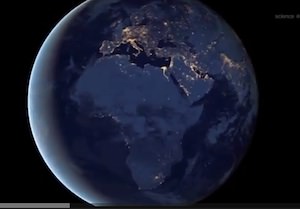
How confident is NASA in its prediction that the world will not end Dec. 21, 2012, the day the Mayan calendar runs out? Very. The space agency has already released a video explaining why the world didn’t end Dec. 21. The video, titled “Why the World Didn’t End Yesterday,” was originally scheduled to be released Dec. 22.
The Guardian:
The prediction that the world would end four days before Christmas 2012 – potentially wreaking havoc with gift buying and travel plans – is a long-standing misconception, Nasa explains.
An accompanying post on the agency’s website, titled Beyond 2012: Why the World Won’t End, says that 21 December this year has been labelled as the end of all things because the Mayan calendar ends on this date.
But “just as the calendar you have on your kitchen wall does not cease to exist after December 31, the Mayan calendar does not cease to exist on December 21, 2012,” Nasa says. Instead, it just starts over again.
NASA notes on its website that it knows “of no threat associated with 2012.” The agency adds: “For any claims of disaster or dramatic changes in 2012, where is the science? Where is the evidence? There is none, and for all the fictional assertions, whether they are made in books, movies, documentaries or over the Internet, we cannot change that simple fact. There is no credible evidence for any of the assertions made in support of unusual events taking place in December 2012.”
A little food for thought for anyone convinced the world will end next week.
— Posted by Tracy Bloom.
Your support matters…Independent journalism is under threat and overshadowed by heavily funded mainstream media.
You can help level the playing field. Become a member.
Your tax-deductible contribution keeps us digging beneath the headlines to give you thought-provoking, investigative reporting and analysis that unearths what's really happening- without compromise.
Give today to support our courageous, independent journalists.
 Editorial Cartoons
 TD Original
When someone talks about the “existential risk” posed by artificial general intelligence, look under the hood.
TD Original
When someone talks about the “existential risk” posed by artificial general intelligence, look under the hood.
 A former Air Force software engineer writes about his time living underground in the Cheyenne Mountain Complex, America’s nuclear command center.


You need to be a supporter to comment.
There are currently no responses to this article.
Be the first to respond.