Ghana Leads Global Push for Slavery Reparations, While Still Paying for Empire at Home
As its gold enriches foreign markets and IMF debt weighs heavily, the country is demanding the world reckon with the “gravest crime against humanity.” Dr. Julius Garvey, son of the American Black nationalist Marcus Garvey, lays a wreath in a ceremony to honor victims of the transatlantic slave trade at Christiansborg Castle during a Juneteenth commemoration ceremony in Accra, Ghana, on June 19, 2026. (Graphic by Truthdig; images by AP Photo, Adobe Stock)
ACCRA, Ghana — Elmina Castle is a historic crime scene for many Africans and African descendants. Every year, thousands of tourists, mostly diasporans wanting to connect with their ancestry, walk through its “Door of No Return,” through which enslaved people were forced before being loaded onto ships bound for the Americas.
The 544-year-old fort on the coast of Ghana’s Central Region was originally built by the Portuguese for the gold and ivory trade, but it then became one of the epicenters of the transatlantic slave trade. Between the 15th and 19th centuries, an estimated 1.8 million Africans — captured and commodified — were held there before being shipped across the Atlantic, never to return.
Elmina Castle was one of Ghana’s top 10 tourist sites for the 1.38 million visitors to the country last year. Many of them see the journey as more of a homecoming — an act of reclaiming identity and heritage, and a recognition of centuries-old wrongs.
Roughly 90 miles away, in Ghana’s capital city of Accra, that recognition has turned into a policy push for reparatory justice. In early 2023, Ghana hosted the landmark Reparation Conference that produced the Accra Proclamation on Reparations.
The African Union adopted justice and reparations as a continental theme for 2025, and a breakthrough came on March 25, 2026, when Ghana spearheaded a United Nations General Assembly resolution declaring the transatlantic slave trade “the gravest crime against humanity.”
While the United States voted against the resolution and most European countries abstained, 123 countries supported it. It was the first time the U.N. used such definitive language. The resolution gives governments, civil society and legal teams new leverage to press for apologies, restitution and institutional reform.
For Africans and African descendants filing in and out of the castle, it seems that things may be finally changing. But how much? Ghana, the first country to attain independence in sub-Saharan Africa, is still affected by modern-day imperialism. Transnational gold mining companies extract the country’s natural resources while leaving behind polluted water and soil. If reparations are about repair, then there has to be real action here too.
Recently, in June, Accra again hosted the summit on reparations, and delegates from some 80 countries adopted a global framework for reparatory justice. The 19-point outline called for nations to provide unconditional apologies for participating in the slave trade and for a commitment to “ensure fair and adequate compensation for people of Africa and People of African Descent.” It also called for U.S. and European decolonization and fairer trading terms.
“We do not seek to reopen old wounds, we seek to heal those wounds,” said Ghana’s president, John Dramani Mahama, at the summit. “We do not seek division, we seek justice, understanding and reconciliation grounded in the truth.”
The African Union adopted justice and reparations as a continental theme for 2025.
President Mahama also announced the creation of three global panels to support the push for reparations over slavery and colonialism. One will build international support, the second will focus on repatriating stolen cultural objects, archives and sacred items to their countries of origin and the third will convene legal experts to examine reparations under international law.
Ghana’s call for reparations is about repairing damage well beyond money, said Ekwow Spio-Garbrah, Ghana’s presidential special envoy for reparations.
“It is about healing over 300 years of structural damage to our psychology, our economies and our development. It is about the industrialization we were denied. It is about the over 400 years of being deprived of control over our own affairs,” he told Joy News.
Going forward, Ghanaians and Africans need to understand the scope of reparations and “liberate ourselves from mental slavery — from the belief that a white man is superior,” he concluded.
The paradox
But, while Ghana leads the global reparations call, mistreatment from Global North countries and others continues at home — not within the walls of castles, but in communities and towns; not with chains, but with contracts and policies that favor foreign companies and interests over local ones. In mid-August alone, Ghana abolished minimum capital requirements for most foreign investors in order to attract more activity from foreign-owned trading companies.
Mining companies, including the U.S. gold mining company Newmont, South Africa’s AngloGold Ashanti, multinational Gold Fields, China’s Zijin Mining and Australia’s Perseus Mining, have exported significant amounts of gold, with total mining exports from Ghana worth $21.36 billion last year. Ghana loses about $2 billion in taxes from gold annually due to undervaluation of these exports, a research consortium found.
Gold is Ghana’s main mining export, and 90% of the industry is foreign owned. “This is the same extraction, different century,” said one debt campaigner, whose name has been withheld for their safety. “First it was gold and humans through this castle. Now it is our resources, our debt, our future.”
In Elmina, Friar Joseph Kwame Blay, a native of Jema, a farming community in the Aowin municipality of the Western North Region of Ghana, walks through the farmyard of a local Catholic church.
“Preservation of nature is important to me, I don’t buy food from the market anymore because it is full of chemicals. The mining has contaminated the soil in farming areas with chemicals,” Blay told Truthdig. “The land is polluted with toxic heavy metals and industrial byproducts.”
The underground Bibiana and open-pit Chirano gold mines in the Western North Region are majority owned and operated by Canada’s Asante Gold. Gold mining in Ghana has led to water pollution, substantial land degradation and severe deforestation amounting to 36% of all tree cover.
“The youth are now leaving Jema for galamsey [illegal mining] because the land we would farm has been degraded by big mining firms,” Patrick Fome, chair of the Jema Anti-Galamsey Advocacy group, told Truthdig. Foreign investors — particularly Chinese — are typically involved in small-scale illegal mines as well, supplying excavators, dredges and mechanized processing equipment, and collaborating with organized crime networks in order to avoid the bureaucracy and permits of formal, large-scale mining, the African Center for Strategic Studies Reported.
A call for reparations at home
Although mining generates some revenue for Ghana, with mining companies paying 17.68 billion Ghanian cedis in taxes in 2024 (about $1.23 billion at 2024 exchange rates), Ghanaians still bear a heavy cost. Roads are poor, schools and clinics are inadequate and youth unemployment is high. Only 27% of the country’s total road network is paved, leaving many rural and peri-urban areas cut off by deep potholes and mud during the rainy season. Nearly half of healthcare facilities lack access to clean water, and 38% of the population suffers from food insecurity.
Traditional leaders are now demanding change. The Apinto Divisional Council, the traditional body of local leaders and elders in the Tarkwa-Nsuaem municipality of the Western Region, has witnessed the operations of multinational mining companies on their land, including Gold Fields Ghana Limited and AngloGold Ashanti. In July, they demanded the government replace Gold Fields, a New York and Johannesburg trading company, with a local operator when its lease expires next year.
Gold is Ghana’s main mining export, and 90% of the industry is foreign owned.
After decades, these mining companies have not contributed significantly to the overall development of the host communities, Nana Adarkwa Bediako III, who is a gyaasehene, or sub-chief, of the Apinto Divisional Council, told Truthdig.
Touring the Gold Fields Ghana Limited mine in Tarkwa recently, the Apinto Divisional Council found that more than 4,000 hectares of Apinto lands have been degraded, depriving Indigenous communities of their livelihoods.
“We believe that the operations of Gold Fields Ghana Limited in Tarkwa have been less beneficial to the Apinto communities than they should have been. We must state that the level of development provided by Gold Fields Ghana Limited does not commensurate with the extent of the degradation of our lands and the socioeconomic challenges confronting our communities,” Adarkwa Bediako said.
“A mine that generates wealth from the lands of Apinto must also create lasting prosperity and sustainable development for the people of Apinto,” he added.
Foreign control of communications and food
The pattern extends beyond mining to telecom, real estate and agribusiness. Ghana’s biggest telecommunications operator, MTN, with a majority of voice and data subscriptions, is South African-owned. Vodafone Ghana is now majority-owned by the Telecel Group, headquartered in London.
In real estate, individuals from Nigeria, the U.K., United States, China, Lebanon, India and South Africa are buying luxury and vacation properties as investments.
In agribusiness, Cargill, Olam, Nestlé and Wilmar dominate cocoa, oil palm and food processing. In poultry, cheaper foreign imports are decimating local production, with Ghana importing 85% of its chicken from mostly European firms that receive subsidies. Ghana exports raw ingredients abroad where they are processed (only 5% are processed domestically), but then it has to import back a lot of processed food. The value is added abroad, and such work is better paid, while Ghanaian farmers are not well paid. Cocoa farmers, for example, report living off one meal a day.
Control through loans
Global financial institutions such as the International Monetary Fund and the World Bank have held sway over Ghana’s economic development by making it implement certain policies in exchange for financial aid.
Ghana has been to the IMF 17 times for bailouts. The last bailout, a $3 billion package in 2023, came with removal of value-added tax exemptions for companies and adjusting fuel prices with inflation. The imposed austerity also included sharp cuts in government spending on vital areas like healthcare.
“Going to the IMF in 2023 wasn’t a choice, it was survival,” economist Adu Owusu Sarkodie, a senior lecturer at the University of Ghana and executive director of the Center for Policy Studies, told Truthdig. “There is no way this economy would have survived without that program.”
Between 2006 and 2024, Ghana’s public debt rose by over 14,700% — from about 5 billion cedis to over 700 billion cedis. Despite having significant amounts of debt canceled a decade ago, Ghana still loses about 30% of government revenue to external debt payments each year. In large part, the debt is due to relying on commodities, on selling raw goods overseas rather than having the capital and machinery to process them locally. That reliance dates back to colonialism, when Britain and other European countries plundered Ghana’s minerals and crops.
“The problem isn’t borrowing,” Sarkodie said. “It’s what we borrow for. If you borrow to build the Accra-Kumasi rail, it pays you back for 100 years. We’re borrowing to keep the lights on today.”
Looking ahead
To be truly liberated economically, Sarkodie suggests a firm grip on the country’s gold revenue, which has the potential to shore up Ghana’s reserves.
“We signed concessionary contracts. We basically gave ownership to the foreign mining companies. They take all the gold and give us peanuts in royalties and taxes,” he said. “Last year, we exported $21 billion worth of gold. How much came to the government? Less than $2 billion. We exported over $3 billion in crude oil. The government got about $1.2 billion.”
He says the government shouldn’t renew those contracts. “Let’s move to production-sharing. Like Botswana. The government has a 55% [share of] a diamond mine. They take 55 bags, the company takes 45, and still pays tax,” he says. “We’re No. 1 in Africa in gold, No. 6 in the world. … We can do it too. Maybe not a full ‘service contract’ yet — we don’t have the tech for that. But we can renegotiate to [a] 50-50 or 60-40 [split] and take physical gold, not just cash.”
He also pointed to the large informal sector, where 80% of Ghanaians work but most don’t pay personal income tax. They also live without any worker rights. The people living on top of the gold can’t be left behind, he stressed.
“First, employ them. At every level — from management to driver to cleaner. Let them learn how to mine responsibly. Second, demarcate. Don’t mine so close that houses start collapsing. Third, protect the environment. No dirty water in our rivers. Dig settling ponds. And pay them rent. A percentage of royalties should go straight to the mining communities. Not for all of Ghana — directly to them. So, they can build schools, hospitals and have something left when the companies leave,” he added.
“We can be self-reliant,” Sarkodie said. “We have the gold, the oil, the people. We just have to stop borrowing to consume, and start building, taxing fairly and owning more of what is ours.”
Rooted in Truth.Independent by Design.
Your support helps ensure that rigorous reporting, thoughtful analysis, and investigative journalism remain accessible to everyone.
Support independent journalism.
 Film
A new Obamas-produced documentary paints a shallow portrait of Ghanaian revolutionary leader Kwame Nkrumah.
Film
A new Obamas-produced documentary paints a shallow portrait of Ghanaian revolutionary leader Kwame Nkrumah.
 Spread by mosquito bites, malaria kills more than 400,000 people every year, two-thirds of them under 5 and most in Africa.
 Our planet's fate is tied to the status of women, whose revolutions have freed and saved the lives of millions without weapons, without fists, without a drop of blood spilled.
 Annan was one of the world's most celebrated diplomats and a charismatic symbol of the United Nations who rose through its ranks to become its first black African leader.
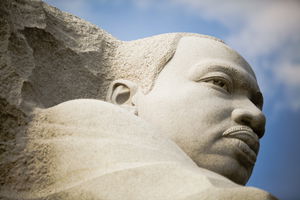 On a 1957 trip to Ghana in connection with its independence from Britain, King and his wife, Coretta, learned the sordid story of colonial oppression.
 She was not only a grass-roots organizer, but a philosopher, a teacher and a revolutionary. She devoted her life to empowering the poor, the working class and communities of color, and was deeply involved with a constellation of movements.
You need to be a supporter to comment.
There are currently no responses to this article.
Be the first to respond.