U.N. Gives Mixed Reviews to Iran’s Nuclear Program
The good news, according to the U.N.'s nuclear agency, is that Iran earlier was forthcoming with information about its nuclear program. The bad news is that Iran is not now offering the same level of transparency, is reportedly still enriching uranium in defiance of the Security Council and may be, according to the BBC, cooperating just enough to avoid additional sanctions. Above, Iranian negotiator Saeed Jalili.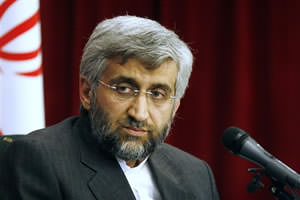
The good news, according to the U.N.’s nuclear agency, is that Iran earlier was forthcoming with information about its nuclear program. The bad news is that Iran is not now offering the same level of transparency, is reportedly still enriching uranium in defiance of the Security Council and may be, according to the BBC, cooperating just enough to avoid additional sanctions.
Your support is crucial...BBC:
The BBC’s Bethany Bell in Vienna says that while a number of questions about Iran’s past nuclear work have been answered, the report says the IAEA’s knowledge about Tehran’s current nuclear programme is diminishing.
The report, a copy of which was obtained by the BBC, found Tehran had been operating 3,000 centrifuges, the machines used to enrich uranium, at its plant at Natanz.
“Contrary to the decisions of the Security Council, Iran has not suspended its enrichment related activities,” the document says.
But the IAEA also noted the answers Iran had given about the history of its centrifuge programme were consistent with the agency’s own findings.
As we navigate an uncertain 2025, with a new administration questioning press freedoms, the risks are clear: our ability to report freely is under threat.
Your tax-deductible donation enables us to dig deeper, delivering fearless investigative reporting and analysis that exposes the reality beneath the headlines — without compromise.
Now is the time to take action. Stand with our courageous journalists. Donate today to protect a free press, uphold democracy and uncover the stories that need to be told.
 The Israeli prime minister has the blood of thousands of U.S. soldiers on his hands, and he’s beating the war drum anew.
 Demanding that Iran unilaterally surrender to American demands that are detached from reality is little more than a prescription for war.
 Before Donald Trump destroys the best global foreign policy achievement of the last decade, the world community has to stop him.
 Credible challenges to claims that Iran sanitized an alleged nuclear site suggest that U.S. officials sought to cover their tracks for a day when international inspectors report discovering nothing incriminating.
 Iran's nuclear program has again become a source of controversy on the global stage, and now Yukiya Amano, the top-ranking official in the United Nations' nuclear oversight organization, has added his voice to the chorus of concerns.
You need to be a supporter to comment.
There are currently no responses to this article.
Be the first to respond.