Is Your Alarm Clock Making You Fat?
Setting an alarm clock before you go to bed could be hazardous to your health, according to research that looks at the body's internal clock.
Setting an alarm clock before you go to bed could be hazardous to your health, according to research that looks at the body’s internal clock. The study, published in May, shows there’s about a one-hour disparity between how much sleep adults get during the week versus the weekend. It also revealed that over the past decades, people have been going to bed later and getting up earlier, resulting in an average of 40 minutes less sleep per night.
Why does any of this matter? Because, according to the researchers’ conclusion, messing with your body’s biological clock can increase your risk for obesity.
Smithsonian magazine:
Previous studies have linked sleep deprivation with excessive weight, but Roenneberg’s team concludes that it isn’t just how much sleep people get that matters—it’s how much they mess with their internal clocks. For every hour of social jet lag accrued, the risk of being overweight or obese rises by about 33 percent. Obesity results from a host of influences, but Roenneberg says “one contributing factor is not living according to your biological temporal needs.” No one knows the precise mechanism, but other studies suggest that lack of sleep causes higher secretions of ghrelin, the appetite hormone, and a reduction of leptin, the satiety hormone.
Our daily lives are controlled by two naturally occurring phenomena: our internal circadian clock and the rotation of the earth. The hub of the body clock resides in a bundle of nerves called the suprachiasmatic nucleus, in the brain’s hypothalamus. This central clock acts as a pacemaker, synchronizing other cellular clocks that scientists believe exist throughout the body. This circadian clock system controls a variety of functions, including body temperature, hormone secretion and blood pressure. It also regulates the daily activities of organs.
— Posted by Tracy Bloom.
Your support matters…Independent journalism is under threat and overshadowed by heavily funded mainstream media.
You can help level the playing field. Become a member.
Your tax-deductible contribution keeps us digging beneath the headlines to give you thought-provoking, investigative reporting and analysis that unearths what's really happening- without compromise.
Give today to support our courageous, independent journalists.
 Labor
New accounts from workers contrast sharply with what chemical giants have said on the record about safety at their facilities.
Labor
New accounts from workers contrast sharply with what chemical giants have said on the record about safety at their facilities.
 Health & Wellness
The medical evidence is clear: The coronavirus global health threat is not an elaborate hoax. Bill Gates did not create the coronavirus to sell more vaccines. Essential oils are not effective at protecting you from coronavirus. But those facts have not stopped contrary claims from spreading both on and offline.
Health & Wellness
The medical evidence is clear: The coronavirus global health threat is not an elaborate hoax. Bill Gates did not create the coronavirus to sell more vaccines. Essential oils are not effective at protecting you from coronavirus. But those facts have not stopped contrary claims from spreading both on and offline.
 It can feel like everyone is stewing in anxiety about COVID-19 and seeing other people freak out can make you freak out more. A psychiatrist explains this phenomenon, and how to keep it in check.
 Opinion
The response to the coronavirus pandemic reveals that it’s possible to significantly reduce emissions that cause air pollution and climate change.
Opinion
The response to the coronavirus pandemic reveals that it’s possible to significantly reduce emissions that cause air pollution and climate change.
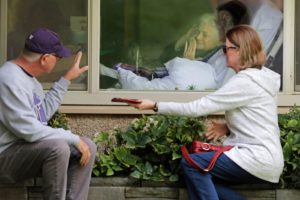 Agencies, local authorities and national governments do not agree on who should be quarantined or what that should actually look like.
 With 17 times as many new infections outside China as in it, Italy and Iran close schools; travel and events are canceled; and markets yo-yo.
You need to be a supporter to comment.
There are currently no responses to this article.
Be the first to respond.