Chemical Exposure Is Suspect in Early Female Puberty
Marcia Herman-Giddens first observed the age of puberty dropping for American girls in the late 1980s. Today, she and other researchers agree that the average age of onset has fallen significantly since the 1970s, and some point toward chemicals like bisphenol A—a ubiquitous hormone-like substance that the FDA recently refused to ban—as a possible cause.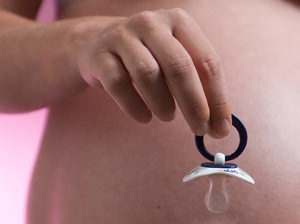
Marcia Herman-Giddens first observed the age of puberty dropping for American girls in the late 1980s. Today, she and other researchers agree that the average age of onset has fallen significantly since the 1970s, and some point toward chemicals like bisphenol A—a ubiquitous hormone-like substance that the FDA recently refused to ban—as a possible cause. –ARK
Dig, Root, GrowThe New York Times:
The medical wisdom, at that time, based on a landmark 1960 study of institutionalized British children, was that puberty began, on average, for girls at age 11. But that was not what Herman-Giddens was seeing. So she started collecting data, eventually leading a study with the American Academy of Pediatrics that sampled 17,000 girls, finding that among white girls, the average age of breast budding was 9.96. Among black girls, it was 8.87.
… One concern, among parents and researchers, is the effect of simultaneous exposures to many estrogen-mimics, including the compound BPA, which is ubiquitous. Ninety-three percent of Americans have traces of BPA in their bodies. BPA was first made in 1891 and used as a synthetic estrogen in the 1930s. In the 1950s commercial manufacturers started putting BPA in hard plastics. Since then BPA has been found in many common products, including dental sealants and cash-register receipts. More than a million pounds of the substance are released into the environment each year.
This year, we’re all on shaky ground, and the need for independent journalism has never been greater. A new administration is openly attacking free press — and the stakes couldn’t be higher.
Your support is more than a donation. It helps us dig deeper into hidden truths, root out corruption and misinformation, and grow an informed, resilient community.
Independent journalism like Truthdig doesn't just report the news — it helps cultivate a better future.
Your tax-deductible gift powers fearless reporting and uncompromising analysis. Together, we can protect democracy and expose the stories that must be told.
This spring, stand with our journalists.
Dig. Root. Grow. Cultivate a better future.
Donate today.
 Mother Jones reporter Mariah Blake tells Amy Goodman there is new research suggesting that even BPA-free plastics contain chemicals that can act like estrogen in the body and cause disease.
 Public concern about the dangers of BPA, or bisphenol A, hasn't translated into regulatory measures on the part of the Food and Drug Administration, as the agency isn't yet cracking down on the chemical, which turns up in a few commonly used products and even in receipts.
 In the face of mounting scientific evidence, Susan G. Komen for the Cure, a nonprofit devoted to wiping out breast cancer, has published statements on its website that dismiss links between the disease and the ubiquitous chemical bisphenol A (BPA), while simultaneously funding research exploring that connection. (more)
 A study has found that workers exposed to high levels of bisphenol A, a chemical widely used in the manufacture of plastics and other consumer goods, were at least four times likelier to report sexual problems, including erectile dysfunction. (continued)
 The chemical BPA is common in plastic products such as baby bottles and food containers, despite concerns among scientists and environmentalists about its safety. The FDA has defended BPA use and recently turned to an outside panel for backup. That group of scientists, however, ended up criticizing the agency's guidelines.
You need to be a supporter to comment.
There are currently no responses to this article.
Be the first to respond.