‘Catcher in the Rye’ Author J.D. Salinger Dies at 91
Time magazine fancifully describes author J.D. Salinger, who died Wednesday at age 91, as "the hermit crab of American letters." That's because after achieving literary fame with his 1951 (and only) novel, "The Catcher in the Rye," Salinger wasn't too keen on being in the public eye.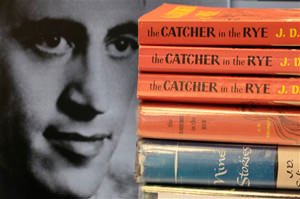
Time magazine fancifully describes author J.D. Salinger, who died Wednesday at age 91, as “the hermit crab of American letters.” That’s because after achieving literary fame with his 1951 (and only) novel, “The Catcher in the Rye,” Salinger wasn’t too keen on being in the public eye. However, Salinger’s crustacean behavior didn’t stop his “Catcher,” or more specifically, the book’s disenchanted hero, Holden Caulfield, from making a significant mark on American culture. –KA
Your support matters…Time:
Salinger’s only novel, The Catcher in the Rye, was published in 1951 and gradually achieved a status that made him cringe. For decades that book was a universal rite of passage for adolescents, the manifesto of disenchanted youth. (Sometimes lethally disenchanted: After he killed John Lennon in 1980, Mark David Chapman said he had done it “to promote the reading” of Salinger’s book. Roughly a year later, when he headed out to shoot President Ronald Reagan, John Hinckley Jr. left behind a copy of the book in his hotel room.) But what matters is that even for the millions of people who weren’t crazy, Holden Caulfield, Salinger’s petulant, yearning (and arguably manic-depressive) young hero was the original angry young man. That he was also a sensitive soul in a cynic’s armor only made him more irresistible. James Joyce and Ernest Hemingway had invented disaffected young men too. But Salinger created Caulfield at the very moment that American teenage culture was being born. A whole generation of rebellious youths discharged themselves into one particular rebellious youth.
Independent journalism is under threat and overshadowed by heavily funded mainstream media.
You can help level the playing field. Become a member.
Your tax-deductible contribution keeps us digging beneath the headlines to give you thought-provoking, investigative reporting and analysis that unearths what's really happening- without compromise.
Give today to support our courageous, independent journalists.
 Danny Strong’s biopic of the renowned novelist veers between the intriguing and the inert.
 What does “Captain Underpants” have in common with James Joyce’s “Ulysses”?
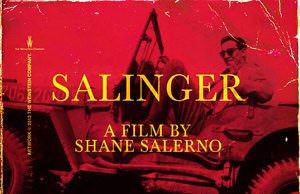 A new documentary wants to find some hidden wound that "explains" the novelist's reclusivity, but I don't think there is one.
 Only when I first started reading what other people had written did I begin to realize that possessing the ability to write shouldn’t automatically demand that a person become a writer.When it comes to the creative arts, the only profession that seems capable of purging its weaklings is sports. Why is this?
You need to be a supporter to comment.
There are currently no responses to this article.
Be the first to respond.