BLANKMay 10, 2008
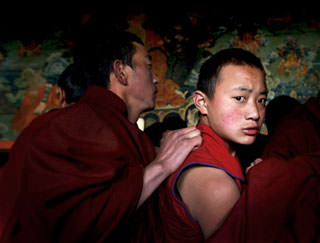
As opening day of the Beijing Olympics approaches, the Chinese government and official media have intensified their attacks on the Dalai Lama, blaming him for the recent violent demonstrations in Tibet. Pico Iyer, whose new book is "The Open Road: The Global Journey of the Fourteenth Dalai Lama," talks with Truthdig's Jon Wiener about this intercultural conflict and about the Dalai Lama himself. Dig deeper ( 3 Min. Read )
Staff / TruthdigMar 27, 2008
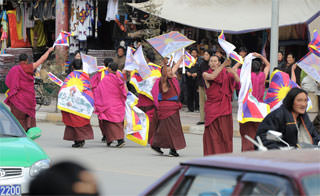
China has allowed a group of foreign journalists an escorted visit to Tibet. News reports from non-state sources are coming out of Lhasa for the first time since protests and riots began two weeks ago. One described part of the city as a "war zone." Dig deeper ( 1 Min. Read )
Staff / TruthdigMar 17, 2008
The governor of Tibet has denied reports that Chinese security forces fired on the civilians and monks who have been demonstrating in the capital city of Lhasa and neighboring provinces. Opposition leaders say 80 or more protesters have been killed and witnesses have reported Chinese soldiers shooting at monks. Dig deeper ( 1 Min. Read )
Join our newsletterStay up to date with the latest from Truthdig. Join the Truthdig Newsletter for our latest publications.
Sarah Stillman / TruthdigJan 22, 2008
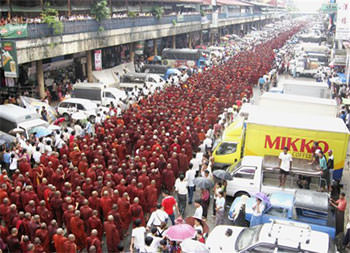
Remember when the world turned its attention to Burma and promised to no longer ignore the suffering of the people there? Truthdig contributor Sarah Stillman sat down with Burmese democracy organizer Maung Maung to check in on the Saffron Revolution and the brave men and women who continue to resist oppression, whether anyone is watching or not. Dig deeper ( 13 Min. Read )
Staff / TruthdigNov 16, 2007
If the combined power of thousands of Buddhist monks staging a nonviolent protest isn't enough to oust Burma's oppressive junta, one American hero (cue movie trailer voice-over) is coming to fight for democracy in a faraway land -- or at least stick his nose in another nation's business. Dig deeper ( 1 Min. Read )
Staff / TruthdigOct 31, 2007
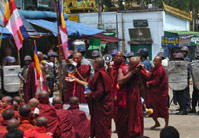
Despite a military crackdown that led to the death and capture of countless civilians, Buddhist monks are once again protesting in Burma, though in much smaller numbers than before. Still, human rights and democracy advocates consider it a promising development. Dig deeper ( 1 Min. Read )
Staff / TruthdigOct 3, 2007
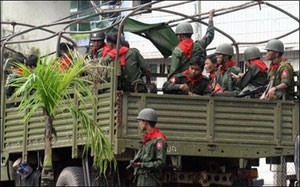
Burma's military government has intensified its crackdown on pro-democracy demonstrators, abducting people from their homes in the middle of the night. U.S. Embassy personnel have found some Buddhist monasteries completely deserted while others have been closed off by soldiers. Dig deeper ( 1 Min. Read )
Amy Goodman / TruthdigOct 3, 2007
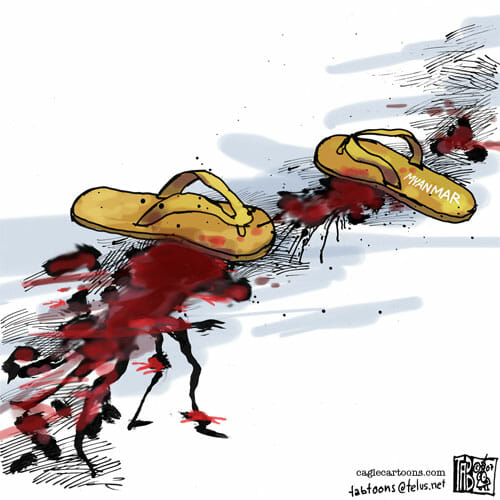
The barbarous military regime depends on revenue from the nation's gas reserves and partners such as Chevron to buy bullets for the guns it points at monks, a detail conveniently ignored by the Bush administration. Dig deeper ( 3 Min. Read )
Staff / TruthdigSep 29, 2007
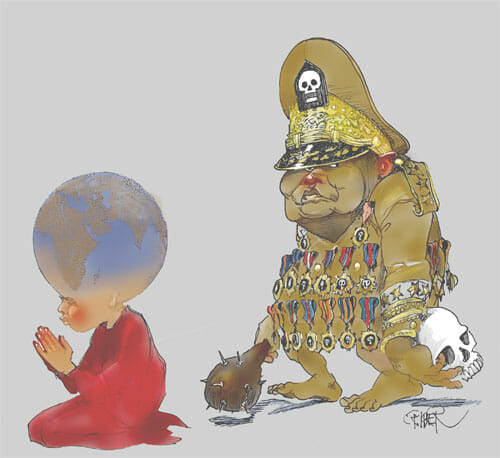
For decades Burma's ruling military junta has governed through terror, determined to meet dissent with intimidation, detention and murder. It is because of the military's particular cruelty that the story of the Buddhist monks of Burma is so compelling. Dig deeper ( 1 Min. Read )
Staff / TruthdigSep 26, 2007
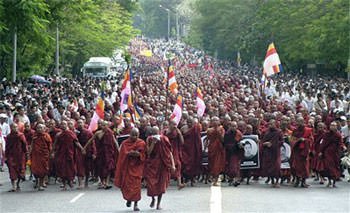
President Bush has weighed in on the massive protests in Burma (Myanmar), saying he will boost sanctions against the country's abusive military government. Meanwhile, thousands of Buddhist monks have defied government warnings and continue to demonstrate. Dig deeper ( 2 Min. Read )
Join our newsletterStay up to date with the latest from Truthdig. Join the Truthdig Newsletter for our latest publications.
Now you can personalize your Truthdig experience. To bookmark your favorite articles and follow your favorite authors, please login or create a user profile.
Now you can personalize your Truthdig experience. To bookmark your favorite articles and follow your favorite authors, upgrade to supporter.