Treasury Projects a Profit From Bailout
Just as Mitt Romney has locked up the Republican nomination on a boast of fiscal conservatism, President Obama's Treasury Department has said it expects to turn a tidy $2 billion profit from TARP and other extraordinary measures taken to bail out the financial industry.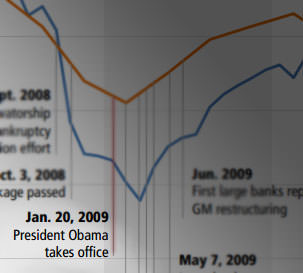
Just as Mitt Romney has locked up the Republican nomination on a boast of fiscal conservatism, President Obama’s Treasury Department has said it expects to turn a tidy $2 billion profit from TARP and other extraordinary measures taken to bail out the financial industry.
As the BBC reports, “The vast majority of the projected returns — more than $179bn — come from the Federal Reserve’s huge investments and loans to banks.”
While the auto bailout is included in Treasury’s calculations — it was a part of TARP, after all — not all government spending on the meltdown has been factored in. To quote from Treasury’s own report: “These estimates do not include the full impact of the crisis on our fiscal position. And they do not include the cost of the tax cuts and emergency spending programs passed by Congress in the Recovery Act and after that were critically important to restarting economic growth.” They also do not seem to include the Federal Reserve’s monetary policy, which involves the kind of math that keeps one awake at night.
Among the many graphs and charts released by Treasury, there’s a recurring motif: a line shaped roughly like a V with little spikes and dips along the way, spanning 2007-2011. Next to the nadir of this line, just before it makes a sharp turn and begins heading in a positive direction, are the words, “President Obama takes office.” It’s a campaign poster. Expect to see it often. — PZS
Your support matters…Independent journalism is under threat and overshadowed by heavily funded mainstream media.
You can help level the playing field. Become a member.
Your tax-deductible contribution keeps us digging beneath the headlines to give you thought-provoking, investigative reporting and analysis that unearths what's really happening- without compromise.
Give today to support our courageous, independent journalists.
 There’s a crucial institution in Washington that few in the media seem to be paying attention to, even as President Trump quietly makes it his own.
 A look at the day's political happenings, including a bipartisan agreement reached on immigration reform and Obama and Clinton give a joint interview on "60 Minutes." A look at the day's political happenings, including a bipartisan agreement reached on immigration reform and Obama and Clinton give a joint interview on "60 Minutes."
 A look at the day's political happenings, including AIG's decision on whether to join a lawsuit against the government over the financial crisis bailout and the White House's response to a petition to deport Piers Morgan.
 A look at the day's political happenings, including Gabrielle Giffords' new PAC, Elizabeth Warren admonishing AIG and Nate Silver talking politics and data analysis on Reddit.
 In the ultimate act of corporate greed, the insurance giant--which received a bailout from the government to the tune of $182 billion--is showing what a truly unscrupulous and morally bankrupt organization it is by mulling whether to join a lawsuit against Uncle Sam over unfair bailout terms.
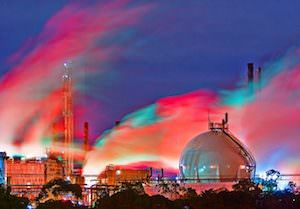 The natural gas industry is waging an aggressive public relations campaign to bolster investor confidence, despite evidence showing that shale gas is an unreliable resource and that the production process releases large amounts of methane into the atmosphere. The natural gas industry is waging an aggressive PR campaign to bolster investor confidence, despite evidence that the production process releases large amounts of methane into the atmosphere.
You need to be a supporter to comment.
There are currently no responses to this article.
Be the first to respond.