
The Death of Online Freedom in Vietnam
Speaking out against the Vietnamese state online was already illegal, but with Decree 72, the government has found new, detailed ways to restrict freedom of expression on the Internet. Linking to or quoting a news source based outside of Vietnam is now banned, thanks to the law in effect as of Sunday.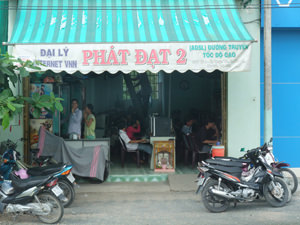
Speaking out against the Vietnamese state online was already illegal, but with Decree 72, the government has found new, detailed ways to restrict freedom of expression on the Internet. Linking to or quoting a news source based outside of Vietnam is now banned, thanks to the law in effect as of Sunday. It also states that foreign websites must have at least one server located in Vietnam, a stipulation that may lead to most sites being blocked. The rest of the world has not responded well to this new form of oppression, according to The Daily Dot:
Reporters Without Borders says Vietnam has imprisoned 35 bloggers, the highest number of any country besides China, which has 15 times Vietnam’s population.
The Freedom Online Coalition, a group of 21 mostly Western governments devoted to tracking free expression online, resoundingly condemned the move. In a statement, the Coalition declared that Decree 72 appears to violate a 2012 decision by the United Nations that human rights, which include free expression, apply equally online.
Criminalizing these acts, the article argues, is “either a drastic misunderstanding of how the Internet works, a stunning seize of power, or both.” From this distance, it looks as though both are at play.
—Posted by Natasha Hakimi
Your support matters…Independent journalism is under threat and overshadowed by heavily funded mainstream media.
You can help level the playing field. Become a member.
Your tax-deductible contribution keeps us digging beneath the headlines to give you thought-provoking, investigative reporting and analysis that unearths what's really happening- without compromise.
Give today to support our courageous, independent journalists.
 The constitutional law expert and Truthdig Editor in Chief Robert Scheer discuss freedom of expression and the history of First Amendment rights.
 The issue for many Catalans is no longer just about economics. It's about a perceived bias and freedom of expression.
 The United Nations High Commissioner for Human Rights is reportedly "extremely concerned" by four neighboring countries' demand that Qatar shut down the television news network.
 The stand at Standing Rock also proved to be a victory for a human right we don’t hear much about: the freedom of peaceful assembly.
 The most comprehensive assessment to date of the user agreement policies of Facebook, Google and Microsoft says the world’s top tech companies are failing when it comes to privacy and freedom of expression.
 What WikiLeaks claims to be the full intellectual property chapter of the Trans-Pacific Partnership appears to give countries greater power to stop sensitive information from going public.
You need to be a supporter to comment.
There are currently no responses to this article.
Be the first to respond.