
Senators Seek to Deny U.S. Jet Parts to Iran
Although the United States and Iran have a testy relationship at best, weaknesses in security protocol currently allow buyers for Tehran to procure valuable aircraft parts from the U.S. military. At least two Democrats in the Senate want to cut off the supply, which would make the Iranian air force effectively irreparable.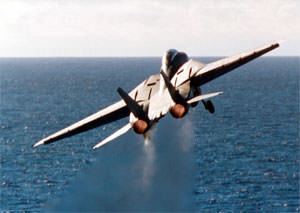
Although the United States and Iran have a testy relationship at best, weaknesses in security protocol currently allow buyers for Tehran to procure valuable aircraft parts from the U.S. military. At least two Democrats in the Senate want to cut off the supply, which would make the Iranian air force effectively irreparable.
Your support matters…AP via Yahoo!:
Sen. Ron Wyden’s bill came in response to an investigation by The Associated Press that found weaknesses in surplus-sale security that allowed buyers for countries including Iran and China to surreptitiously obtain sensitive U.S. military equipment including Tomcat parts.
The Oregon Democrat’s legislation would ban the Defense Department from selling surplus F-14 parts and prohibit buyers who have already acquired surplus Tomcat parts from exporting them. Wyden’s bill, the Stop Arming Iran Act, is co-sponsored by the Senate’s No. 2 lawmaker, Democratic Whip Richard Durbin of Illinois.
The surplus sales are one of the first national security issues to be addressed by the new Democratic-controlled Congress.
“It just defies common sense to be making this kind of equipment available to the Iranians with all that they have done that is against our interests,” Wyden said Monday in an interview, adding that constituents brought up the surplus-sale security problems at his town-hall meetings over the past few days. “I just want to legislate this and cut it off permanently, once and for all.”
Independent journalism is under threat and overshadowed by heavily funded mainstream media.
You can help level the playing field. Become a member.
Your tax-deductible contribution keeps us digging beneath the headlines to give you thought-provoking, investigative reporting and analysis that unearths what's really happening- without compromise.
Give today to support our courageous, independent journalists.
 Preliminary recorder data show Flight 302's erratic movements resemble those of a Lion Air jetliner before each of the Boeing 737 Max 8's went down.
 With legendary inventor Elon Musk in the vanguard, innovators are racing to design an all-electric aircraft. One fact that spurs them on: Today's aviation-fuel airplanes are a significant part of the pollution crisis.
 Well, this is awkward. Iran's state-run Press TV reported Thursday that a special Revolutionary Guard "electronic warfare unit" had gained remote control of a U.S. drone and landed it after it had flown more than 100 miles into Iranian airspace.
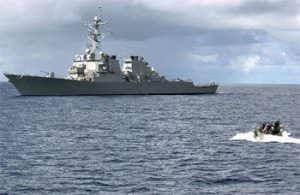 The carrier group sent to the Persian Gulf to intimidate and irritate Iran apparently struck a nerve. The U.S. Navy says that five suspected Iranian ships came within "close proximity" of one of a group of three American vessels. The ships turned around and no shots were fired, according to a Navy official and news reports.


You need to be a supporter to comment.
There are currently no responses to this article.
Be the first to respond.