Justice for Sale?
The Supreme Court, arguably the most powerful institution in our democracy, manages to fly a bit under the radar. Take, for example, the $1.5-million advance Rupert Murdoch paid Clarence Thomas to write a book. Conflict of interest, perhaps? The Nation's Jon Wiener thinks so.
The Supreme Court, arguably the most powerful institution in our democracy, manages to fly a bit under the radar. Take, for example, the $1.5-million advance Rupert Murdoch paid Clarence Thomas to write a book. Conflict of interest, perhaps? The Nation’s Jon Wiener thinks so.
Your support matters…The Nation:
The publication facts behind Thomas’s book ought to be discussed by all the candidates: he received an advance of $1.5 million in 2003 from HarperCollins, which is owned by Rupert Murdoch. If you thought the Court dealt with any issues of relevance to Murdoch, you might call it a conflict of interest for Thomas to accept that payment–far more than any sitting justice ever received from any single source. At least you might mention the fabled “appearance of impropriety.” You might call the $1.5 million a thank-you gift from Murdoch for services rendered. You might even wonder if it might be a subtle suggestion to other justices who will be ruling on Murdoch-related issues in the future.
Of course Thomas could avoid that “appearance of impropriety” by recusing himself for the rest of his career from any case raising issues concerning Murdoch, Fox, the First Amendment, copyright law, libel, or any other issues in media or communications law. That would give him a lot of time off.
Independent journalism is under threat and overshadowed by heavily funded mainstream media.
You can help level the playing field. Become a member.
Your tax-deductible contribution keeps us digging beneath the headlines to give you thought-provoking, investigative reporting and analysis that unearths what's really happening- without compromise.
Give today to support our courageous, independent journalists.
 Book Review
A Review of "Notes on Downtown" by writer, photographer and editor Désirée van Hoek.
Book Review
A Review of "Notes on Downtown" by writer, photographer and editor Désirée van Hoek.
 “Prison Truth,” underlines the importance of inmates telling their own stories.
 A new graphic biography may herald a revival of interest in the most perceptive Marxist critic of his time.
 A new book shows how the activist's positions on issues like the Vietnam War and environmental justice helped move civil rights leaders left.
 Roslyn Fuller's new book explains how to rescue our government from oligarchy.
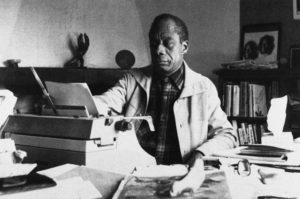 A new book explores the legacy of a momentous 1965 debate about race in America.
You need to be a supporter to comment.
There are currently no responses to this article.
Be the first to respond.