How Is Brazil’s Spying Different From the NSA’s?
After Brazilian agents were discovered to have photographed American, Russian and other diplomats, Justice Minister Jose Eduardo Cardoso claimed these acts were nothing like U.S. spying.
After Brazilian agents were discovered to have photographed American, Russian and other diplomats, Justice Minister Jose Eduardo Cardoso claimed these acts were nothing like U.S. spying. President Dilma Rousseff, who made a compelling speech at the U.N. General Assembly denouncing American surveillance, may have to eat her words now that her own intelligence agency has been caught red-handed.
And yet, Cardoso insists there’s no comparison between what his nation’s agents did and what the U.S. National Security Agency does. The BBC reports:
“I see completely different situations. What happened in relation to Brazil and other countries was a violation. Emails and phone calls were violated, which is an affront to Brazilian sovereignty,” [Cardoso] told reporters.
The minister described the alleged activities as “counter-intelligence” operations, intended to “verify whether other countries were spying” on Brazil.
The report leaked to Brazil’s Folha de S. Paulo newspaper says agents from the national intelligence agency, Abin, followed and photographed diplomats from at least three countries: the US, Iran and Russia.
It has since been officially confirmed by Abin.
The US state department suggested Brazil’s activities were routine.
“As we have indicated in the past, all nations gather foreign intelligence,” it said in a statement, which also sought to reinforce the countries’ “partnership”.
Brazil was angered by revelations that the US National Security Agency (NSA) had hacked the computer network of state-run oil company Petrobras to collect data on emails and telephone calls.
The allegations of electronic espionage also led to Brazil and Germany asking the UN General Assembly to adopt a draft resolution calling for the right to privacy in the digital age.
There you have it. Spying is apparently OK as long as you’re spying only to ascertain whether you’re under surveillance. Wait, what?
—Posted by Natasha Hakimi
Your support matters…Independent journalism is under threat and overshadowed by heavily funded mainstream media.
You can help level the playing field. Become a member.
Your tax-deductible contribution keeps us digging beneath the headlines to give you thought-provoking, investigative reporting and analysis that unearths what's really happening- without compromise.
Give today to support our courageous, independent journalists.
 Technology
The billionaire's so-called battle for free speech is really about leveraging social media to reshape global politics in favor of the right.
Technology
The billionaire's so-called battle for free speech is really about leveraging social media to reshape global politics in favor of the right.
 Americas
President Lula da Silva’s election brought hopes of reversing destruction of the Amazon. Will a new fossil fuel boom undermine promises of change?
Americas
President Lula da Silva’s election brought hopes of reversing destruction of the Amazon. Will a new fossil fuel boom undermine promises of change?
 Americas
The special commission analyzed the events that led to the attack a week after Luiz Inácio “Lula” da Silva's inauguration.
Americas
The special commission analyzed the events that led to the attack a week after Luiz Inácio “Lula” da Silva's inauguration.
 Women
Celebrating victories and decrying injustices, the march was a rallying cry for Indigenous rights.
Women
Celebrating victories and decrying injustices, the march was a rallying cry for Indigenous rights.
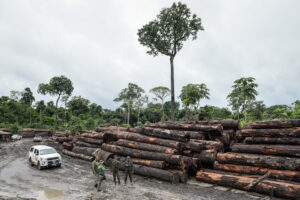 Americas
The Belém agreement overlooks how environmental crimes in the Amazon are intertwined with drug trafficking and transnational crime groups.
Americas
The Belém agreement overlooks how environmental crimes in the Amazon are intertwined with drug trafficking and transnational crime groups.
 Environment
International mining companies arrive in Jequitinhonha Valley, promising development and provoking concerns about local compensation and water scarcity.
Environment
International mining companies arrive in Jequitinhonha Valley, promising development and provoking concerns about local compensation and water scarcity.
You need to be a supporter to comment.
There are currently no responses to this article.
Be the first to respond.