
House Votes to Change Patriot Act by Stopping Bulk Phone Data Collection
The House of Representatives on Wednesday gave Senate Majority Leader Mitch McConnell a big reason to crank up his hustle if he wants to hang on to the part of the Patriot Act that allows for the bulk collection of Americans' phone records.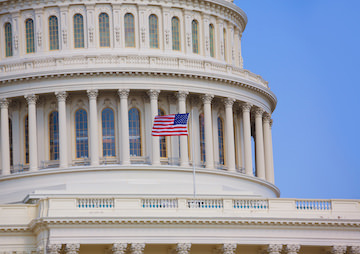 The U.S. Capitol. (Shutterstock)
The House of Representatives on Wednesday gave Senate Majority Leader Mitch McConnell a big reason to crank up his hustle if he wants to hang on to the part of the Patriot Act that allows for the bulk collection of Americans’ phone records. And, to be clear, he does want to keep that contested clause in the legislation.
Also read: Why the ACLU’s Big Victory Against NSA Surveillance Falls Short.
The New York Times brought word of the day’s House vote on the metadata issue:
Under the bipartisan bill, which passed 338 to 88, the Patriot Act would be changed to prohibit bulk collection by the National Security Agency of metadata charting telephone calls made by Americans. In addition, the legislation would bar permitting bulk collection of records using other tools like so-called national security letters, which are a kind of administrative subpoena.
The near unanimity in the House is not reflected in the Senate, where a bipartisan group that backs the House bill faces opposition from Mr. McConnell and a small but powerful group of defense hawks who want no change, and from another faction led by Senator Rand Paul, Republican of Kentucky, that is pressing for even greater restrictions of data collection.
A compromise of some form must be reached before June 1, when the provision of the Patriot Act that allows the N.S.A. dragnet expires.
The paper also pointed out that Edward Snowden’s metadata-related revelations served as a catalyst for this latest legislative development, which was also influenced by last week’s federal appeals court ruling that the NSA’s bulk collection activities were illegal.
–Posted by Kasia Anderson
Your support matters…Independent journalism is under threat and overshadowed by heavily funded mainstream media.
You can help level the playing field. Become a member.
Your tax-deductible contribution keeps us digging beneath the headlines to give you thought-provoking, investigative reporting and analysis that unearths what's really happening- without compromise.
Give today to support our courageous, independent journalists.
 Recent shock over the former New York mayor's comments as President Trump's lawyer fails to take into account Giuliani's past, argues the "Last Week Tonight" host.
 Now that fundamentalists have their man in the White House, they are running another assault on democracy that would make the late televangelist Jerry Falwell proud.
 The American populace empowers militarism through questions not asked and platitudes unchallenged.
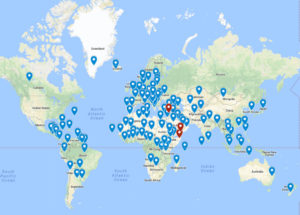 Elite troops were deployed to 149 nations in 2017, according to U.S. Special Operations Command.
 The author imagines an alternative strategy for then-President George W. Bush on Sept. 12, 2001, and beyond.
 Researchers are learning that those joining armed groups in the Middle East and Africa do so because U.S. and allied forces are “fighting them there.”


You need to be a supporter to comment.
There are currently no responses to this article.
Be the first to respond.