Forbidden Starbucks
The Starbucks empire is often lampooned for its many, many stores, but the coffee giant has lost one of its most prominent locations. Responding to the demands of more than half a million citizens, the Chinese government closed down the Starbucks in the Forbidden City, the ancient imperial palace complex in the heart of Beijing.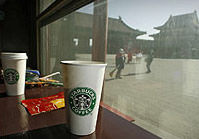
The Starbucks empire is often lampooned for its many, many stores, but the coffee giant has lost one of its most prominent locations. Responding to the demands of more than half a million citizens, the Chinese government closed down the Starbucks in the Forbidden City, the ancient imperial palace complex in the heart of Beijing.
While a coffee stand might not seem out of place in the Louvre, there was something truly bizarre (and approaching self-parody) about the sight of that familiar Starbucks decor in the middle of carefully preserved ancient Chinese atmosphere.
Coffee fans, fear not. Starbucks still has plans to colonize every other street corner in the world. Just kidding … kind of.
Your support matters…BBC:
The Starbucks outlet was forced to close in July, having long been accused of tarnishing the historical site.
The shop, which opened in 2000, sought to quell the protests two years ago by removing its distinctive signage.
But the move failed to satisfy its critics. An online campaign earlier this year led by a state television personality drew more than 500,000 signatures.
Independent journalism is under threat and overshadowed by heavily funded mainstream media.
You can help level the playing field. Become a member.
Your tax-deductible contribution keeps us digging beneath the headlines to give you thought-provoking, investigative reporting and analysis that unearths what's really happening- without compromise.
Give today to support our courageous, independent journalists.
 Economic Justice
The tax credits are too complicated and trade warriors are blocking cheaper Chinese models.
Economic Justice
The tax credits are too complicated and trade warriors are blocking cheaper Chinese models.
 Asia Pacific
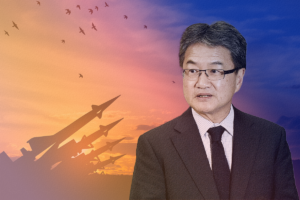
Biden envoy, Joseph Yun, helped shape defensive policy for the Pacific islands while consulting for a private firm that represents a massive conflict of interest.
Asia Pacific
Biden envoy, Joseph Yun, helped shape defensive policy for the Pacific islands while consulting for a private firm that represents a massive conflict of interest.
 Asia Pacific
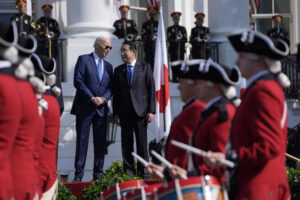
The celebration of a "categorical leap” in Japanese rearmament risks inflaming tensions in the Pacific.
Asia Pacific
The celebration of a "categorical leap” in Japanese rearmament risks inflaming tensions in the Pacific.
 Politics
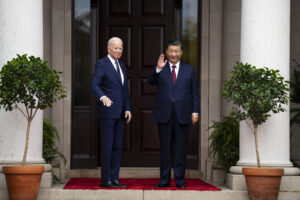
We should actively pursue policies in the national interest, not intentionally inflame tensions at the expense of international cooperation.
Politics
We should actively pursue policies in the national interest, not intentionally inflame tensions at the expense of international cooperation.
 Editorial Cartoons
 Technology
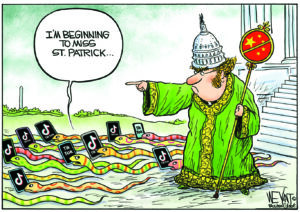
The recent push to effectively ban TikTok has little to do with security concerns and everything to do with a neo-McCarthyite view of China.
Technology
The recent push to effectively ban TikTok has little to do with security concerns and everything to do with a neo-McCarthyite view of China.
You need to be a supporter to comment.
There are currently no responses to this article.
Be the first to respond.