
Floods Fall, Anger Rises
After the past weeks' disastrous floods, many in the rural Midwest are looking to the government not with gratitude but animosity. Folks in towns that requested levees back in 1993 were left, paradoxically, high and dry by the Army Corps of Engineers, which required small communities to pay more than $1 million for flood barriers.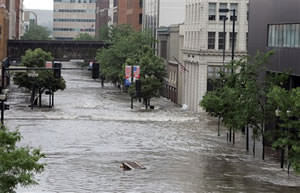
After the past weeks’ disastrous floods, many in the rural Midwest are looking to the government not with gratitude but animosity. Folks in towns that requested levees back in 1993 were left, paradoxically, high and dry by the Army Corps of Engineers, which required small communities to pay more than $1 million for flood barriers.
Your support matters…Los Angeles Times:
After the great floods of 1993 swamped this tiny town in eastern Iowa, Mike Luck begged the U.S. Army Corps of Engineers to help protect it from future disasters.
Corps officials responded that this community of fewer than 700 residents probably would have to chip in more than $1 million to help build the federally engineered levee system it sought, the former mayor recalled.
Unable to raise the funds, New Hartford built an earthen berm, which breached recently when Beaver Creek flooded, part of the widespread flooding in six Midwestern states.
“There was no way we could get that kind of money pulled together for a levee,” Luck said. “It took this town more than three years of bake sales and barbecues to raise enough money for new playground equipment.
Independent journalism is under threat and overshadowed by heavily funded mainstream media.
You can help level the playing field. Become a member.
Your tax-deductible contribution keeps us digging beneath the headlines to give you thought-provoking, investigative reporting and analysis that unearths what's really happening- without compromise.
Give today to support our courageous, independent journalists.
 Instead of “feminism that is ‘all the rage,’ we need an intersectional, collective rage," argues Sarah Banet-Weiser in her book "Empowered."
 The former Trump campaign manager's trial could mirror the five stages of grief following personal loss and tragedy: denial, anger, bargaining, depression and acceptance.
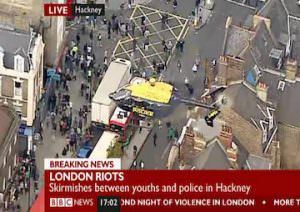 As new research by the University of Oxford suggests that the 2011 U.K. riots were linked to economic inequality and distrust of police, a contrite rioter-turned-community-organizer writes about the low feelings that drove him to join the aggressive free-for-all.
 "One cannot make fun of faith," Pope Francis said on the day another cartoonist victim of the Charlie Hebdo attacks was buried. "Oh yes, you can," replied Polly Toynbee in The Guardian.

 All right, people, it's high time someone dealt squarely with this question: Does John McCain have anger-management issues? Monday brought word on this potential problem, the Republican Party's sword of Damocles, from provocateur Christopher Hitchens, who dares to ask "whether [McCain's] elevator goes all the way to the top."


You need to be a supporter to comment.
There are currently no responses to this article.
Be the first to respond.