Cluster Bomb Treaty Steps Forward
It looks like a pact to ban current cluster bomb designs will take another step forward, with more than 100 countries slated to sign the treaty in the next couple of days. However, the U.S., Russia and China -- the largest cluster bomb manufacturers -- so far have refused to sign on.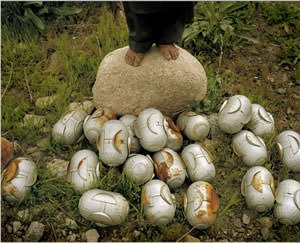
It looks like a pact to ban current cluster bomb designs will take another step forward, with more than 100 countries slated to sign the treaty in the next couple of days. This is the next stage in a process, begun in Dublin in May 2008, to reduce the use of cluster bombs in warfare. However, the U.S., Russia and China — the largest cluster bomb manufacturers — so far have refused to sign on.
Your support matters…The BBC:
The first of more than 100 countries have begun signing a treaty to ban current designs of cluster bombs, at a conference in Oslo, Norway.
Campaigners are hailing the treaty as a major breakthrough.
But some of the biggest stockpilers, including the US, Russia and China, are not among the signatories.
First developed during World War II, cluster bombs contain a number of smaller bomblets designed to cover a large area and deter an advancing army.
Independent journalism is under threat and overshadowed by heavily funded mainstream media.
You can help level the playing field. Become a member.
Your tax-deductible contribution keeps us digging beneath the headlines to give you thought-provoking, investigative reporting and analysis that unearths what's really happening- without compromise.
Give today to support our courageous, independent journalists.
 The most recent manifestation of the urge to engage in an “arms race” will no doubt create more insecurity in an already unstable world.
 A deep-seated denial about the colonial ideology undergirding gun rights in the U.S. has hampered the left's approach to arms control.
 Since at least 2001, the Saudis and Israelis have successfully reframed American policy in the Greater Middle East, and the results have been disastrous.
 The president's arms sales are meant to promote pork-barrel politics, while pumping up the profits of U.S. weapons manufacturers. As for human rights or human lives, who cares?
You need to be a supporter to comment.
There are currently no responses to this article.
Be the first to respond.