Berlin Embraces Bitcoin
Germany is the first country to make an official decision about the status of the online currency. The nation's Finance Ministry acknowledged Bitcoin as “private money” and a “currency unit,” which means it can be taxed when used commercially, but not so for personal purposes.
Germany is the first country to make an official decision about the status of the online currency. The nation’s Finance Ministry acknowledged Bitcoin as “private money” and a “currency unit,” which means it can be taxed when used commercially, but not so for personal purposes.
As fewer people trust banks, Bitcoin’s popularity has grown internationally. The idea behind the online currency is to establish “peer-to-peer, relatively anonymous payment” and thus help protect users from identity theft. Although some say Bitcoin’s anonymous nature will make it more appealing to scammers, a court case in Texas proved otherwise, says RT News:
At the beginning of August, a US federal judge in Texas ruled that Bitcoin is a legitimate currency. The decision came after Trendon Shavers, a 30-year-old businessman, was charged with running a Ponzi scheme, scamming customers out of roughly US$4.5 million worth of the crypto-currency through his online hedge fund. He argued that Bitcoin is not real money and therefore is not subject to regulation by the US government. However, the court dismissed his claim.
The ruling brought Bitcoin one step closer to being recognized as a real currency. However, the decision opened up the possibility for the virtual money to be regulated by governments, which oppose the original concept of Bitcoin. …
Germany’s recognition of the currency is thus another bittersweet moment for Bitcoin as, like the Texas court case, the step legitimizes it while compromising its mission.
—Posted by Natasha Hakimi
Your support matters…Independent journalism is under threat and overshadowed by heavily funded mainstream media.
You can help level the playing field. Become a member.
Your tax-deductible contribution keeps us digging beneath the headlines to give you thought-provoking, investigative reporting and analysis that unearths what's really happening- without compromise.
Give today to support our courageous, independent journalists.
 Economic Justice
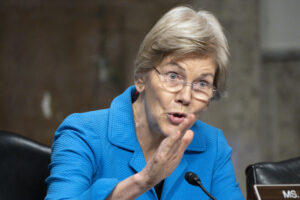
Elizabeth Warren (D-Massachusetts) and J.D. Vance (R-Ohio) have joined forces in a rare bipartisan effort to make top executives pay for their mistakes.
Economic Justice
Elizabeth Warren (D-Massachusetts) and J.D. Vance (R-Ohio) have joined forces in a rare bipartisan effort to make top executives pay for their mistakes.
 Lessons learned from the 2008 financial crisis show that taxpayer-funded blank checks to institutions do nothing to help those struggling
 Because our banks aren't nationalized, its inability to work with Congress has resulted in another botched attempt at crisis management.
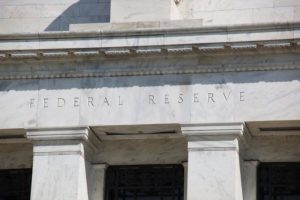 Its forced choice to bankroll hedge funds and other speculative ventures in repo market comes at a price to the middle class.
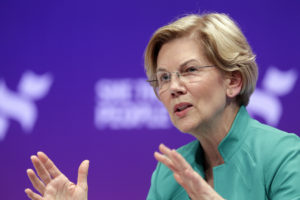 The Massachusetts senator and Democratic presidential contender wants to make it harder for big banks to prey on consumers.
 The threat of a U.S. technology company taking up the model set by China's WeChat Pay and Alipay may now be materializing.
You need to be a supporter to comment.
There are currently no responses to this article.
Be the first to respond.