AUDIO: ‘Rigour’: A Poem Digs Beneath ‘Third World’ Tropes in the Media
Khairani Barokka's poignant poem highlights how Western reports of casualties in the developing world, even when the dead in question are children, are often recorded with indifference toward the human lives lost.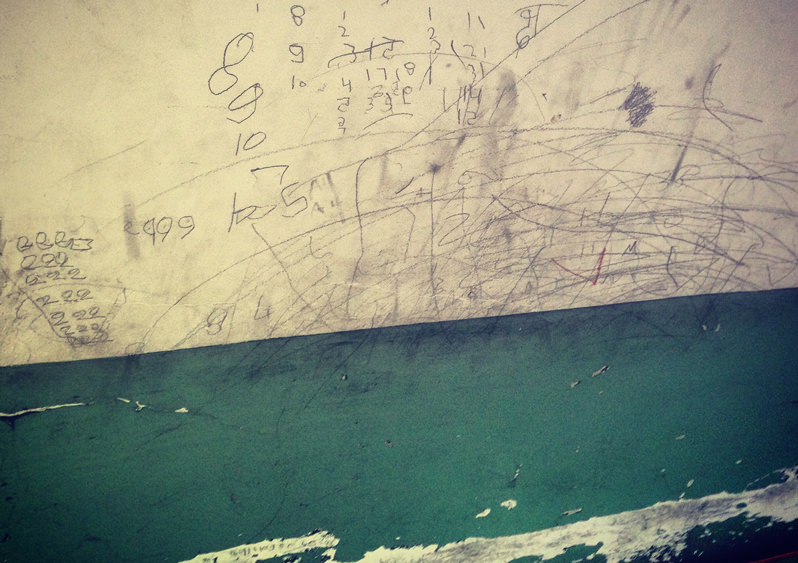 Khairani Barokka
Khairani Barokka’s poignant poem highlights how Western reports of casualties in the developing world, even when the dead in question are children, are often recorded with indifference toward the human lives lost. Listen to Barokka read her poem “Rigour,” and follow along below.
Khairani Barokka reads “Rigour”
Rigour
Khairani Barokka
This is what they will say about my daughter And her eyes: that the way they haunt your Memories are vestiges of trauma, of how a Child was caught between battling tribes, Her reddened feet, chapped and just visible Beneath one ragged hemline, laid waste to Near-bleeding. Girl, aged eight, page 11.
It was her birthday. She was smiling again, Moments after the man left our village, Having been unsure of how to reconcile the Reach of zoom lenses with a robot cartoon Seen that morning—both unwieldy, pointing. Washing off the ruddy paint we’d placed By her room. The war had never touched Our subdistrict; all roads to it were closed by 3PM. Their jeep driver would never ring the Bureau chief. My daughter stood by the side Of the road, having drawn a rusty, laughing Rooster on paper with the balls of her heels.
Khairani Barokka was born in Jakarta, Indonesia, in 1985. She is a writer, poet, artist and disability and arts advocate. She was a Tisch Fellow at New York University, a writer-in-residence at the Emerging Writers Festival in Australia and Indonesia’s first writer-in-residence at Vermont Studio Center. She wrote, produced and performed in “Eve and Mary Are Having Coffee,” which premiered at Edinburgh Fringe 2014, and was most recently artist-in-residence at Rimbun Dahan, Malaysia. She has performed, taught or presented work in nine countries, and is published in anthologies and literary journals in print and online. She has just completed two poetry manuscripts, “Pilot Light” and “Oil and enamel on linen: poems.” Learn more about her work at www.khairanibarokka.com.
Your support matters…Independent journalism is under threat and overshadowed by heavily funded mainstream media.
You can help level the playing field. Become a member.
Your tax-deductible contribution keeps us digging beneath the headlines to give you thought-provoking, investigative reporting and analysis that unearths what's really happening- without compromise.
Give today to support our courageous, independent journalists.
 Technology
The premise of Web 2.0 was always toxic, but the peer pressure it exerted on journalists was especially destructive.
Technology
The premise of Web 2.0 was always toxic, but the peer pressure it exerted on journalists was especially destructive.
 The urgent Indian documentary “While We Watched” captures journalism under fire.
 Book Excerpt
How the Espionage Act of 1917 is the most important yet least understood law threatening freedom of the press in modern American history.
Book Excerpt
How the Espionage Act of 1917 is the most important yet least understood law threatening freedom of the press in modern American history.
 The top U.S. diplomat, accused of cussing and demanding Mary Louise Kelly point to Ukraine on unmarked map, unleashes angry, direct attack.
 Even in countries that value press freedom, women are routinely subjected to threats of rape and other forms of online abuse.
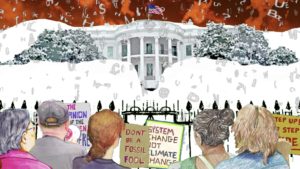 Holiday Animation
Truthdig's 2020 holiday animation illustrates (and demonstrates) how words, and journalism, still hold power.
Holiday Animation
Truthdig's 2020 holiday animation illustrates (and demonstrates) how words, and journalism, still hold power.
You need to be a supporter to comment.
There are currently no responses to this article.
Be the first to respond.