
American Social Mobility Ain’t What It Used to Be
This will hardly be news to many, but The New York Times weighed in Wednesday about the American dream being harder to achieve for those occupying the lower socioeconomic levels of society than either their wealthier contemporaries or their counterparts from past eras.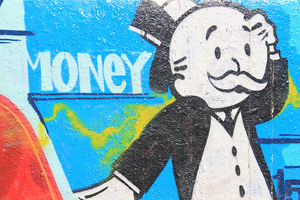
This will hardly be news to many, but The New York Times weighed in Wednesday about the American dream being harder to achieve for those occupying the lower socioeconomic levels of society than either their wealthier contemporaries or their counterparts from past eras. Hence, the rise of a certain Occupy movement in recent months. Thank you, New York Times. —KA
Your support matters…The New York Times:
Benjamin Franklin did it. Henry Ford did it. And American life is built on the faith that others can do it, too: rise from humble origins to economic heights. “Movin’ on up,” George Jefferson-style, is not only a sitcom song but a civil religion.
But many researchers have reached a conclusion that turns conventional wisdom on its head: Americans enjoy less economic mobility than their peers in Canada and much of Western Europe. The mobility gap has been widely discussed in academic circles, but a sour season of mass unemployment and street protests has moved the discussion toward center stage.
Independent journalism is under threat and overshadowed by heavily funded mainstream media.
You can help level the playing field. Become a member.
Your tax-deductible contribution keeps us digging beneath the headlines to give you thought-provoking, investigative reporting and analysis that unearths what's really happening- without compromise.
Give today to support our courageous, independent journalists.
 Military strength has become our national religion, as well as our very own road to perdition.
 The civil rights icon's courageous call for peace and criticism of his government in a time of war must not be lost to history.


You need to be a supporter to comment.
There are currently no responses to this article.
Be the first to respond.