|
|
|
|
|
|
|
|
|
|
|
|
|
|
|
|
|
|
By Edward W. Said
By Gregory Wilpert $17.79
$35
|
|
|
|
 jetalone (CC BY 2.0)
|
A government audit showed Japanese authorities have used funds intended for reconstruction after the 2011 earthquake and tsunami on unrelated projects. Those paid for out of the $150 billion relief package include roads in Okinawa, advertisements for Japan’s tallest building and whaling research.
Posted on Oct 31, 2012
READ MORE
|
 U.S. Treasury Department
|
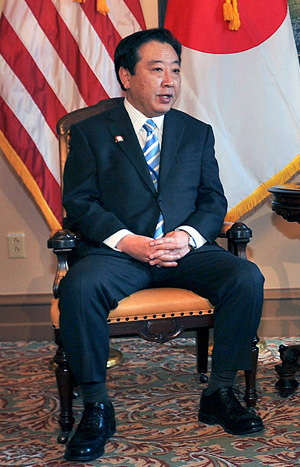
Japan has already burned through five prime ministers in five years, with a sixth, Yoshihiko Noda, expected to take over from Naoto Kan on Tuesday. Kan was forced to resign Friday because of dissatisfaction with his response to the earthquake and tsunami that devastated the country. (more)
|
|
By Amy Goodman — In recent weeks, radiation levels have spiked at the Fukushima nuclear power reactors in Japan, with recorded levels of 10,000 millisieverts per hour at one spot. This is the number reported by the reactor’s discredited owner, Tokyo Electric Power Co., although that number is simply as high as the Geiger counters go.
|

|
The earthquake that hit Japan last March not only triggered a tsunami that devastated the island nation, but created waves that traveled all the way to the ice shelves of Antarctica ... (more)
Posted on Aug 9, 2011
READ MORE
|
 bbc.co.uk
|
After spring’s catastrophic earthquake and tsunami, Japanese Prime Minister Naoto Kan’s administration created the position of minister for reconstruction and looked to appointee Ryu Matsumoto to help the recovery effort on several levels. That didn’t turn out so well.
|
|
Luojie, Cagle Cartoons, China Daily, China —
Posted on May 13, 2011
READ MORE
|
 Flickr / randomwire Some rights reserved
|
Japan says it will not abandon nuclear power in the wake of the quake and tsunami that resulted in the evacuation of more than 200,000 people, thousands of human deaths, an ongoing containment crisis and intensive efforts to fortify vulnerable reactors. Correction: Earlier this report erroneously said more than 200,000 deaths had occurred. We thank the readers who pointed out the mistake. (more)
|
|
Paresh Nath, Cagle Cartoons, The Khaleej Times, UAE —
Posted on Apr 18, 2011
READ MORE
|
 Illustration by PZS based on a graphic by Cary Bass
|
Japanese officials have revised the nuclear disaster at the Fukushima Daiichi plant to level 7, making it the second such disaster in history, the only one since the Chernobyl meltdown. It had previously been described as being on the scale of Three Mile Island, a smaller event.
|
 shibuya246 (CC-BY-ND)
|
Tokyo has been through a lot, but the mega-city is aiming high in the reconstruction department by vying for the 2020 Olympic Games. Tokyo blew about $176 million on its failed attempt at winning the 2016 Games, but might have an edge this time around owing to ...
|
 bbc.co.uk
|
This time, fears of another devastating tsunami were thankfully unfounded after another big earthquake—a 7.1 this time—shook Japan late Thursday, but workers at the trouble-plagued Fukushima Daiichi nuclear power plant didn’t take any chances.
|
 Kyodo
|
Just to prove that things aren’t all bad in the world, here’s a bit of uplifting news. The Japanese Coast Guard plucked a small dog from wreckage floating three miles at sea three weeks after the earthquake and tsunami that ravaged the country’s northeast coast.
|
 AP / DigitalGlobe/dapd
|
Lest anyone doubt who is responsible for the disaster at the Fukushima Daiichi nuclear power plant, Japanese Prime Minister Naoto Kan just discarded the uncritical routine and said plant owner TEPCO’s low standards “invited the current situation.”
|
 AP / DigitalGlobe/dapd
|
Finally, a little good news out of Japan’s Fukushima Daiichi nuclear station—but just a little. On Tuesday, workers struggling to contain radiation leaks and prevent further damage to the plant got a bit of a boost with the restoration of lighting in the control room.
|
 guardian.co.uk
|
Other international emergencies have clearly occurred in the 10 days since the catastrophic earthquake and tsunami hit Japan, but the crisis hasn’t ended in one country just because the news cameras have roamed elsewhere in the meantime.
|
|
Olle Johansson, Cagle Cartoons, Sweden —
Posted on Mar 21, 2011
READ MORE
|
|
Taylor Jones, Cagle Cartoons, Politicalcartoons.com —
Posted on Mar 20, 2011
READ MORE
|
|
Kap, Cagle Cartoons, Spain —
|
 AP / The Yomiuri Shimbun, Yasushi Kanno
|
Adding to safety fears for those in Japan, the government there has reportedly found trace amounts of radioactive iodine in the tap water of six areas, including Tokyo.
|
 news.bbc.co.uk
|
The continuing crisis at the devastated Fukushima Daiichi nuclear plant has led Japan to raise the alert level there to five on a seven-point scale of atomic hazard severity.
|
|
Jiho, Cagle Cartoons, France —
Posted on Mar 18, 2011
READ MORE
|
 Illustration by PZS based on a graphic by Cary Bass
|
Here are the latest headlines from Japan’s struggle to prevent nuclear meltdown at the Fukushima Daiichi plant as of early Friday morning (Japan time).
|
|
By Amy Goodman — A reporter, describing the devastation of one city in Japan, wrote: “It looks as if a monster steamroller had passed over it and squashed it out of existence. I write these facts ... as a warning to the world.” The reporter was Wilfred Burchett, writing from Hiroshima, Japan, on Sept. 5, 1945.
|
 AP / DigitalGlobe/dapd
|
Corporate interests might have played a big part in the design and maintenance of Japan’s nuclear complex at Fukushima, according to Russian nuclear accident expert Iouli Andreev, who knows a thing or two from Chernobyl’s example ...
|

|
On Tuesday’s “Democracy Now!” broadcast, Japan’s burgeoning nuclear crisis was once again the most pressing issue of the day, as experts urged Japanese authorities to expand the evacuation areas around volatile reactors.
Posted on Mar 15, 2011
READ MORE
|
|
By Eugene Robinson — Nuclear power was beginning to look like a panacea—a way to lessen our dependence on oil, make our energy supply more self-sufficient and significantly mitigate global warming, all at the same time. Now it looks more like a bargain with the devil.
|

|
On Monday, Japan’s Fukushima Daiichi nuclear plant was in critical condition after two explosions and system failures that added a whole new level to the country’s crisis in the wake of Friday’s earthquake and tsunami.
|
|
David Fitzsimmons, Cagle Cartoons, The Arizona Daily Star —
Posted on Mar 14, 2011
READ MORE
|
|
Frederick Deligne, Cagle Cartoons, Nice-Matin, France —
Posted on Mar 14, 2011
READ MORE
|

|
These images aren’t about disaster porn—they are taken from too far a remove, first of all—but rather, they show the scope of the devastation from last week’s earthquake and tsunami in Japan in stunning before-and-after contrast.
|

|
A large explosion has occurred at the Unit 3 reactor at Japan’s Fukushima nuclear power plant. The explosion included a large orange flash, which indicates that it was likely the result of a hydrogen detonation. This explosion follows the partial destruction of the Unit 1 containment building in a previous hydrogen explosion.
|
|
Nate Beeler, Cagle Cartoons, The Washington Examiner —
Posted on Mar 13, 2011
READ MORE
|
 news.bbc.co.uk
|
Japan’s prime minister, surveying the incredible damage inflicted by a massive earthquake and tidal wave and a still-unfolding nuclear disaster, said the country is facing its gravest crisis since World War II.
|
 AP / The Yomiuri Shimbun, Yasushi Kanno
|
By Derek Lazzaro — Wednesday (Japan time), multiple news services reported that Japanese officials had withdrawn all emergency workers from the Fukushima Daiichi nuclear power plant.
|
 guardian.co.uk
|
Strong aftershocks kept Japan on edge Saturday, a day after a devastating earthquake and tidal waves battered the country’s northeastern coast. Officials estimated the death toll at 1,700, but thousands more are missing.
|

|
This week’s discussion on “Left, Right & Center” begins with some thoughts on the devastating earthquake and tsunami in Japan before turning to the still-critical situation in Libya, Obama’s strategy for dealing with soaring gas prices, and yet another scandal at NPR.
Posted on Mar 11, 2011
READ MORE
|
|
Pavel Constantin, Cagle Cartoons, Romania —
Posted on Mar 11, 2011
READ MORE
|

|
A magnitude-8.9 earthquake centered 250 miles from Tokyo produced a tsunami Friday that could be seen washing buildings away. Several hundred people are estimated to have been killed in its aftermath. Updated
|
 AP / Kailapillai Ruthiran
|
Massive flooding battering the island nation of Sri Lanka has been described as the worst natural disaster there since the 2004 tsunami, killing at least 27 people and inundating thousands of acres of vital rice fields.
Posted on Jan 14, 2011
READ MORE
|
 AP / Felipe Dana
|
More than 500 people have been killed in the mountain towns of Brazil’s Rio de Janeiro state, with officials fearing that the toll will go higher as massive flooding and mudslides continue in the region.
|
 bbc.co.uk
|
On Wednesday, two days after an earthquake-triggered tsunami hit the shores of Indonesia’s Mentawai Islands, local officials reported problems with an alert system that should have warned islanders of the incoming tidal wave.
|
|
By Amy Goodman — The White House is engaged in fierce behind-the-scenes negotiations with Congress on whether to restore aid to the Indonesian military, which has a habit of committing atrocities.
|
 bbc.co.uk
|
Chile’s new president, conservative billionaire Sebastian Piñera, came in with a bang and a tsunami warning on Thursday. Just minutes before his swearing-in ceremony, a 6.9-magnitude aftershock rattled Chileans, still shaken from last month’s giant quake, and cut Piñera’s inaugural festivities short.
Posted on Mar 11, 2010
READ MORE
|
 Television Nacional de Chile via The BBC
|
An earthquake in central Chile has killed more than 140, authorities say, and triggered both a tsunami and a declaration of a “state of catastrophe.” Chilean President Michelle Bachelet warned that there would probably be more deaths and more aftershocks.
|

|
A whopping 7.6 earthquake hit the coastal town of Pedang, on the Indonesian island of Sumatra, full force on Wednesday, causing survivors to flee in fear of a possible tsunami in its aftermath and leaving thousands more trapped under collapsed buildings.
|
 AP photo / Wang Jiaowen, ColorChinaPhoto
|
Americans apparently have a track record of opening their wallets to assist those in need after natural disasters at home and abroad. That was the case, at least, after the 2004 tsunami in Asia and Hurricane Katrina in the U.S. in 2005. But the picture looks different in the wake of the recent cyclone in Burma and the earthquake in China, leaving international trend-watchers asking: What gives?
|
View older articles:
1 2 >
View the most popular tags overall?
|
|