|
|
|
|
|
|
|
|
|
|
|
|
|
|
|
|
|
|
By Juan Cole $25.60
By Marilynne Robinson $24.00
$18
|
|
|
|
 Illustration based on images from T-Mobile and Apple.
|
By Peter Z. Scheer — Not so long ago, T-Mobile was suicidal. Now it wants to be the first pro-consumer cellular network.
Posted on Apr 22, 2013
READ MORE
|
 facebook.com/LesMisMovie
|
By Richard Schickel — There are times when a cast of dozens, working intensely, is actually superior to a cast of hundreds working routinely.
Posted on Dec 26, 2012
READ MORE
|
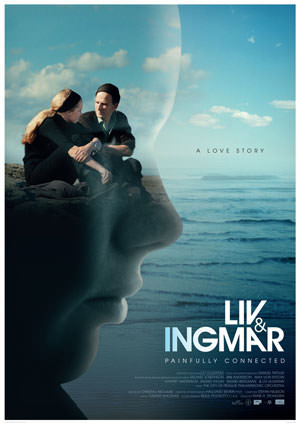
 A still from 'Amour'
|
By Richard Schickel — I think the message of “Amour,” if it may be said to have one, is that love is sometimes—probably rarely—eternal.
Posted on Dec 20, 2012
READ MORE
|
 Image from "Economix: How and Why Our Economy Works (and Doesn't Work), in Words and Pictures"
|
By Thomas Hedges, Center for Study of Responsive Law —
Fedspeak, vague and convoluted answers to economic questions, was popularized by Alan Greenspan, chairman of the Federal Reserve from 1987 to 2006. It allowed him to essentially say “no comment” without admitting that he was avoiding questions.
Posted on Dec 14, 2012
READ MORE
|
 Still from Paramount Pictures
|
By Richard Schickel — “Flight” is a mildly unsatisfying film, chiefly, I think, because we’ve been here before.
Posted on Nov 5, 2012
READ MORE
|
 Warner Bros./Publicity Still
|
By Richard Schickel — I don’t know how much of the picture—beyond its basic premise—is “true.” And, frankly, I don’t give a damn.
Posted on Oct 15, 2012
READ MORE
|
 Still from "The House I Live In" courtesy Derek Hallquist
|
By Peter Z. Scheer — A new documentary about prison and the drug war makes the science fiction dystopias of “Looper” and “Dredd 3D” feel disturbingly plausible.
Posted on Oct 1, 2012
READ MORE
|
 Detail from "The Master" poster via IMDb
|
By Richard Schickel — The critics simply have too much invested in the still young director to acknowledge that “The Master” has to rank somewhere between a disappointment and a disaster.
Posted on Sep 17, 2012
READ MORE
|
 Warner Bros.
|
By Richard Schickel — We want it to be good. We certainly don’t want it to be the occasion for tragedy. What we are forced to settle for, though, is aimlessness.
Posted on Jul 23, 2012
READ MORE
|
 Warner Bros.
|
By Peter Z. Scheer — “Magic Mike” is an entertaining movie that unfortunately lacks the courage of its own predilections.
Posted on Jul 2, 2012
READ MORE
|
 Paramount
|
By Richard Schickel — No movie dedicated to Kim Jong Il can be all bad. On the other hand, “The Dictator,” the product of Sacha Baron Cohen, cannot be all good either.
|

|
By Shashi Tharoor —
The raw pathos of the characters in “Behind the Beautiful Forevers: Life, Death, and Hope in a Mumbai Undercity” is of the kind usually found in great fiction, except in Katherine Boo’s book, they’re real people.
|

|
By Mel White — James C. Hormel’s transformation from a confused and closeted gay kid to the nation’s first openly gay ambassador is chronicled in his memoir “Fit to Serve.”
|

|
By Thomas Byrne Edsall —
Are voters as polarized as their elected officials? The question, which has serious implications in an election year, has put political scientists at loggerheads in several new and recent books.
|

|
By Cherilyn Parsons — “The Orphan Master’s Son” by Adam Johnson is a rich, careening, dystopian tale that gives us a visceral hit of life inside North Korea.
|

|
By Jonathan Yardley —
“Himmler was the complete opposite of a faceless functionary,” Peter Longerich writes in “Heinrich Himmler.” “The position he built up over the years can instead be described as an extreme example of the almost total personalization of political power.”
|

|
By Mr. Fish — Art Spiegelman’s “MetaMaus” is a 300-page user’s guide to his own Pulitzer Prize-winning “Maus” (you know, Holocaust-graphic-novel-Jews-as-mice-Nazis-as-cats).
|

|
By William Drozdiak —
In “After the Fall: The End of the European Dream and the Decline of a Continent,” Walter Laqueur explains how Europe’s success in constructing a harmonious community of states actually masked serious social, economic and political vulnerabilities that proved too fragile to bear the world’s most severe financial crisis since the Great Depression.
|

|
By Jean Randich — Lauren B. Davis’ thrilling, polyphonic new novel, “Our Daily Bread,” takes us into a backwoods clan rife with child abuse and incest, and asks the question: “When does another person’s suffering become my responsibility?”
|

|
By Jeff Shesol —
“The desire to be inspired,” William F. Gavin writes in “Speechwright,” “to be uplifted, to be made to feel deeply, to be swept away, and thrilled is the mark of jaded citizens who have forgotten that the major goal of political rhetoric should be to make good arguments, clearly and honestly.”
|

|
By Mel White — According to James H. Cone’s “The Cross and the Lynching Tree,” Jesus was crucified by the same principalities and powers that lynched almost 5,000 black people in this country. The lynching tree is the cross in America.
|

|
By Julia Frey —
A marvelous new biography of Vincent Van Gogh asks what if it was untreatable epilepsy that drove him mad, he didn’t cut off his lobe for a woman and he was killed by delinquents rather than committing suicide?
|

|
By Christen Clifford —
Jennifer Baumgardner’s new book of essays and interviews, “F ’em! Goo Goo, Gaga, and Some Thoughts on Balls,” connects generations of women thinking about women, from the suffragettes to women’s libbers, from riot grrrls to Lady Bloggers.
|

|
By Kelly Johnson —
Ellen E. Schultz’s “Retirement Heist: How Companies Plunder and Profit From the Nest Eggs of American Workers” reveals how fleecing the elderly is just business as usual for corporations. If the retirement industry isn’t reined in, she concludes, we’ll be right back where we were in the 1930s.
|

|
By Rayyan Al-Shawaf —
Howard Jacobson’s novel “No More Mr. Nice Guy” travels well-worn territory: the male midlife crisis in search of laughs.
Posted on Nov 17, 2011
READ MORE
|

|
Edward P. Morgan, in this excerpt from “What Really Happened to the 1960s: How Mass Media Culture Failed American Democracy,” maintains that “the mass media’s ‘’60s’ discourse is chiefly one of ghosts, accusations, and smoke and mirrors that has long played on audience emotions and diverted public attention to what is essentially a symbolic form of spectator politics.”
|

|
By John Tirman —
In “The Shadow World,” Andrew Feinstein gives us perhaps the most comprehensive account of the global arms trade ever written, an industry in which the supreme ideology is greed.
|

|
By Michael Dirda — “I keep an eye on the love life of the Colorado beetle and work against it,” Samuel Beckett writes in this second volume of his collected letters. “… That is to say by throwing the parents into my neighbor’s garden and burning the eggs. If only someone had done that for me!”
|

|
By Michelle Alexander —
Is the massive surge of imprisonment a contagious disease? Does the answer lie in the structure of our democracy? Two new books suggest so.
|

|
By Robin Shamburg — The Internet, for the authors of “A Billion Wicked Thoughts: What the World’s Largest Experiment Reveals About Human Desire,” is a boggling treasure trove of research on human sexual behavior.
|
 Facebook/IdesOfMarchMovie
|
By Richard Schickel — George Clooney is the nominal star (and director) of “The Ides of March,” a not particularly thrilling, but sort of agreeable, political thriller, in which he is largely AWOL.
|

|
By Gwen Ifill —
Two new books take radically different approaches to questions of race introspection—one academic, the other anecdotal.
|

|
By Allen Barra — Two new volumes—a biography and an anthology—shine light on G.K. Chesterton, an inhabitant of the twilight realm of the praised but unread.
|

|
Some lovers of wit rank G.K. Chesterton as one of the greatest aphorists. Here’s a GKC sampler.
|
 Sony Pictures
|
By Richard Schickel — “Moneyball” is a good story and people who have little interest in baseball don’t need to fear it. On the other hand, it has its largely overlooked problems.
|

|
By Nomi Prins — Catastrophic convergence, the “collision of political, economic, and environmental disasters,” is the theme of Christian Parenti’s epic new book, “Tropic of Chaos.”
|

|
By Lee Smith —
Robin Wright’s new book, “Rock the Casbah,” surveys the people of Islam a decade after 9/11 and finds they have turned not toward extremism but moderation.
|

|
By John Dean — As I mentioned to friends when I started reading Dick Cheney’s memoir, I was doing it so others would not have to. And, as a precaution, I did it alone in case my head exploded. It did not. This book is a bomb, but not the exploding kind.
|

|
By Jean Randich — “Acts of War: Iraq and Afghanistan in Seven Plays,” edited by Karen Malpede, Michael Messina and Bob Shuman, steps into the moral vacuum left by politicians, corporations and religious leaders.
|

|
The recently published “Acts of War: Iraq and Afghanistan in Seven Plays” collects seven works for the stage, all of them about war. Here are excerpts from two of those plays, “9 Circles” by Bill Cain and “American Tet” by Lydia Stryk. A review of the book will be published in this column Friday.
|
 Facebook.com / BrightonRockMovie
|
By Richard Schickel — The original “Brighton Rock” is so good—in its dank and sometimes almost unwatchable way—that it obviates a remake. But that never stopped anyone, did it?
|

|
By Heller McAlpin —
Joseph Heller’s brilliant satire on the absurdities of war and bureaucracy has hit the half-century mark. Commemorating the anniversary are the first full-scale biography of the novelist and a more personal project by his daughter.
|

|
By Louise Rubacky — The author-playwright-filmmaker’s most recent book, “The Secret Knowledge: On the Dismantling of American Culture,” is an irrational and reactionary diatribe about what’s wrong with liberals. Humorless too. Talk about a loss for America.
|

|
By Jonathan Yardley —
Beijing in summer 2008 was in the whirl of pre-Olympics madness, and Tom Scocca’s “Beijing Welcomes You” recounts the absurdities and peculiarities of an ancient city caught between its past and its future as the capital of an emerging global power.
Posted on Aug 12, 2011
READ MORE
|
 First Generation Films via IMDb
|
By Richard Schickel — In the summer, when we are always in the mood for fun and frolic, “The Whistleblower” is an easy movie to ignore. But we should not.
|

|
By Tom Artin — Psychiatrist Robert Jay Lifton’s new book is more a professional than a personal memoir. “Witness to an Extreme Century” is structured around the four topics that have occupied him most: thought reform, Hiroshima survivors, Vietnam veterans, and the Nazi doctors.
|

|
Psychiatrist Robert Jay Lifton, in his memoir “Witness to an Extreme Century,” interviews Albert Speer about his 15 years as a prominent Nazi and “Hitler’s architect.”
|

|
By Cherilyn Parsons — Ann Patchett’s sixth novel, “State of Wonder,” poses a provocative question: If, ladies, you could preserve your fertility into your 50s, 60s or even later, would you?
|

|
By Robin Shamburg — David Schmahmann, in the era of Spitzer, Edwards, Weiner and Schwarzenegger, has written a novel about a powerful man who risks his reputation and career for illicit sex and ends up in an unlikely relationship with a Bangkok bar girl. “The Double Life of Alfred Buber” may in some ways feel like a mystery novel, but it’s much more than that.
Posted on Jul 21, 2011
READ MORE
|

|
In David Schmahmann’s new novel, Alfred Buber is a respected man with a secret. Telling his boss and colleagues that he’s going to Paris, he regularly travels instead to Southeast Asia to go whoring in the squalid back alleys. And then on one of his trips to Bangkok, he falls in love.
|
View the most popular tags overall?
|
|