MARILYNN MARCHIONE / The Associated PressNov 26, 2018
A Chinese researcher says he helped make the world's first genetically edited babies—twin girls born this month. Dig deeper ( 7 Min. Read )
Staff / TruthdigJul 2, 2018
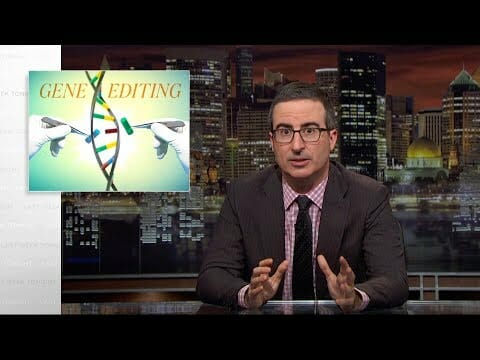
The "Last Week Tonight" host dismisses Hollywood-esque hysteria over genetic engineering, but highlights some of its very real dangers. Dig deeper ( 1 Min. Read )
Marilynn MarchioneNov 15, 2017
The experiment was made on a 44-year-old man in an effort to permanently change his DNA to cure a debilitating disease called Hunter syndrome. Dig deeper ( 5 Min. Read )
Join our newsletterStay up to date with the latest from Truthdig. Join the Truthdig Newsletter for our latest publications.
Alexander Reed Kelly / TruthdigJan 27, 2016
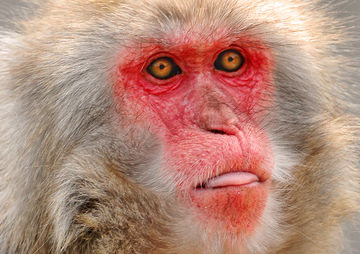
Researchers in China have engineered monkeys to develop symptoms associated with autism in the hope that scientists can find a treatment for the condition in humans. Dig deeper ( 1 Min. Read )
Staff / TruthdigDec 21, 2015
Here are the 10 poems that readers liked best from our very own original political poetry series, inaugurated this year. Here are the 10 poems that readers liked best from our very own original political poetry series, inaugurated this year. Dig deeper ( 2 Min. Read )
Staff / TruthdigOct 14, 2015
Based on a study that posits that the children of Holocaust survivors may inherit genes altered by their parents' trauma, Megan Collins' poem beautifully ponders how to live with the tragic fact that "blood remembers blood." Dig deeper ( 1 Min. Read )
Kasia Anderson / TruthdigAug 24, 2015
This could be the stuff of a scientific breakthrough: A research team out of Mount Sinai Hospital in New York City has published a study that points to the possibility that trauma sustained by one generation can actually be passed down, in a sense, to children and maybe even farther down the genetic chain. Dig deeper ( 2 Min. Read )
Alexander Reed Kelly / TruthdigJul 24, 2015
A study suggests that a student's weakness in one academic subject over others is likely caused by environmental factors, such as teaching. Dig deeper ( 2 Min. Read )
Alexander Reed Kelly / TruthdigJan 2, 2015
Two-thirds of all cancers diagnosed in adults are caused by random mutation during the ordinary process of stem cell division, while the rest are down to genetic inheritance and lifestyle, researchers at Johns Hopkins Kimmel Cancer Center found. Dig deeper ( 2 Min. Read )
Staff / TruthdigNov 12, 2014
The Israeli prime minister doesn't seem to notice the changes occurring in Europe with regard to Palestine; scientists have discovered the brain has different neurons for each flavor category; meanwhile, Google is offering to store a copy of your genome in the cloud at a small fee. These discoveries and more after the jump. Dig deeper ( 2 Min. Read )
Staff / TruthdigJul 19, 2014
A new laboratory technique enables biologists to "edit" the genetic makeup of entire species for purposes ranging from the benevolent to the nefarious, with the "potential to cause ecological mayhem," Antonio Regalado reports in MIT Technology Review. Dig deeper ( 2 Min. Read )
Join our newsletterStay up to date with the latest from Truthdig. Join the Truthdig Newsletter for our latest publications.
Now you can personalize your Truthdig experience. To bookmark your favorite articles and follow your favorite authors, please login or create a user profile.
Now you can personalize your Truthdig experience. To bookmark your favorite articles and follow your favorite authors, upgrade to supporter.